

Food and beverage brands live in the most visually loaded, trend-sensitive corner of social media. One post can tip a purchase decision, one flavor request in the comments can predict next year’s shelf, and one bad influencer pick can burn a launch budget. MAVRK Studio builds social strategies for hospitality and CPG founders that skip the applause metrics and move product. This guide walks the concrete steps: audience, platform mix, content, influencers, and the numbers that matter. Skill level: intermediate. Time to first insight: four to six weeks.
What You’ll Need Before You Start
Before you touch a content calendar, get the foundation in place. Missing pieces here are why most food and beverage social programs plateau at month three.
Accounts and tools to have ready
You need admin access across every platform your brand touches, plus a clean read on what is already working. That means the boring stuff: logins, permissions, analytics, and a budget you can actually spend against. The team that runs your brand strategy foundation should own this checklist, not the intern.
- Admin access to Instagram, TikTok, YouTube, and any secondary channels (Pinterest, Threads, LinkedIn if you sell B2B).
- A written unique selling proposition and brand vision. Without these, messaging drifts across channels within a month.
- Analytics access, native insights plus a third-party tool if you can afford one, to establish a baseline before anything changes.
- Budget clarity across three buckets: content production, paid media, and influencer fees. Food and beverage campaigns typically pull from all three.
- A minimum four-to-six-week runway before engagement data is stable enough to guide optimization.
Prior knowledge and time budget
Assume intermediate familiarity with social platforms and basic media planning. If you have never run a paid campaign, block a week for platform tutorials before starting. Founders who launch a new brand should plan for at least ten hours per week from a marketing owner, plus creator or agency time on top.
Takeaway: No admin access, no USP, no analytics baseline, no start. Fix those first.
Before You Start: Define Your Audience and Platform Mix
Nothing to back up for this one. But do lock your positioning before you post, because rewriting the brand voice mid-quarter costs more than a full content shoot.
Conduct audience research to identify your core demographic
According to Coegi, the first move is understanding who already engages with your brand organically: age, gender, geography, socioeconomic status, and the niches they live in. Younger audiences pull toward emotional and entertaining short-form video. Older audiences reward informative, trustworthy content. Our creative agency notes hammer this constantly: the audience defines the aesthetic, not the other way around.
Dig into motivation, not just demographics. Are your buyers signaling prestige, family connection, health, sustainability, or convenience? Those internal drivers should shape messaging before a single asset gets produced. A brand identity built on the wrong motivator will underperform even with a big media budget behind it.
Match platform selection to where your audience is active
More than 70% of consumers turn to social media for food recommendations, according to Gourmet Ads. That makes platform choice a revenue decision, not a branding exercise. Validate with third-party data alongside native analytics, since competitor posting patterns are a lagging indicator at best. Founders in the CPG category tend to over-index on Instagram out of habit; check whether your buyer actually lives there before you commit.
Takeaway: Pick platforms by where the audience spends time, not where your competitors post.
Step-by-Step: Build Your Food and Beverage Social Media Strategy
Step 1: Set measurable campaign objectives
Tie every objective to a business outcome. Retail shelf placement, direct-to-consumer conversions, trial drive, repeat purchase. Not follower count. Not impressions in isolation. Our 90-day system frames objectives against a launch window so teams stop confusing motion with progress.
Step 2: Develop a content calendar around food occasions and trends
According to Tastewise consumer intelligence, “trendy” is the fastest-growing consumer experience signal in food and beverage social content, up 123.7% in the past year. “Comfort” and “homemade” are close behind, up 76.3% and 78.4% respectively. Translation: build your calendar around familiar-but-elevated food moments, and align launches with active trend windows rather than internal calendars. The hospitality category reads especially hot on comfort signals right now.
Map content to occasions the audience already cares about: seasonal cravings, cultural moments, weekly rituals. Skip the branded-anniversary posts nobody clicked on.
Step 3: Activate influencer partnerships at the right tier
Micro-influencers with 5,000 to 25,000 followers tend to deliver higher authenticity and peer-level trust than macro creators, per Forbes, which makes them effective for trial and trend seeding. And 49% of consumers depend on influencer recommendations when making purchase decisions, per Coegi. That is a direct conversion driver, not just awareness. Trends including kale, coconut water, and kombucha went mainstream on the back of celebrity and athlete endorsement before retailers caught up. Case work like The Rice Cream shows the same pattern at a smaller scale.
Takeaway: Objectives tie to sales. Content tracks live trend signals. Influencers get chosen for audience fit, not follower count.
Step-by-Step: Create Content That Converts
Step 4: Produce visual content optimized for each platform
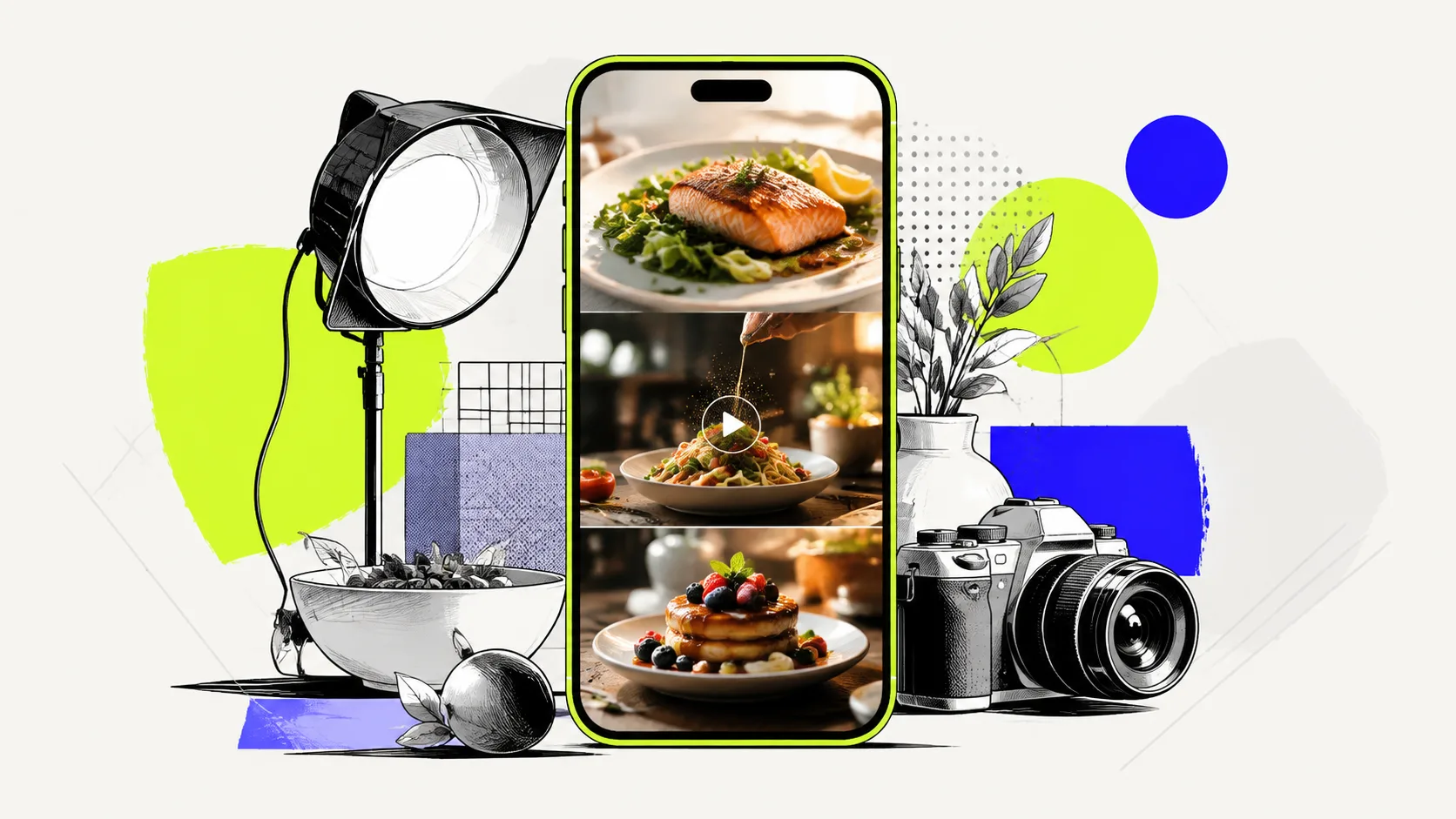
Food is inherently visual, so production quality is not optional. Forbes notes creators with strong photo and video skills often outperform higher-reach influencers with weaker craft. Instagram rewards high-production stills and Reels. TikTok rewards native-feeling short video that looks like it came from a phone, because it did. YouTube supports longer recipe or review formats that deepen consideration. Studio work like Edenesque shows how platform-native production reads differently from repurposed hero footage.
Step 5: Integrate shoppable formats and user-generated content
Shoppable ads and affiliate links connect point-of-sale data back to social campaigns, so you can attribute conversion, not just awareness. User-generated content is the counterweight: low cost, high trust, hard to fake. Recipes, unboxings, meal moments; the stuff paid creative cannot replicate. Our content strategy playbooks push UGC to at least 30% of the feed for emerging brands.
Step 6: Manage your community as a first-party data stream
Comment threads are a live consumer research channel. Tastewise data suggests requests for flavors, formats, and occasions in comments today are leading indicators of shelf demand six to twelve months out. Log them. Route them to product innovation and retail sales, not just the social manager. Founder-led brands like Folkland treat community signal as a co-input to the roadmap.
Takeaway: Native production per platform, shoppable integrations for attribution, UGC for trust, comments for demand signal.
Troubleshooting Common Food and Beverage Social Media Problems
Most food and beverage social programs fail in one of four predictable ways. Diagnose before you re-brief.
Low engagement despite consistent posting
- Symptom: Consistent posting cadence, flat or declining engagement.
- Cause: Content is not aligned with active audience motivators or current trend signals.
- Fix: Refresh audience research using platform analytics and third-party trend data. Rework content themes against live signals, not last quarter’s brief. The digital marketing blog has more on trend-refresh cadences.
Influencer campaigns that drive reach but not sales
- Symptom: Big reach numbers, no measurable sales lift.
- Cause: Partners were picked on follower count instead of audience alignment and conversion intent.
- Fix: Add affiliate link tracking and coupon codes so influencer activity ties to point-of-sale data. Evaluate future partners on audience match. Common product branding mistakes show up here first.
Content that performs on one platform but not another
- Symptom: A format wins on Instagram, dies on TikTok.
- Cause: Cross-posting without adapting to native format expectations.
- Fix: Produce platform-native variations. Shorter and less produced for TikTok, higher polish for Instagram Reels and grid. Reference work like Cha Lab demonstrates the split.
High impressions with no retail or DTC conversion
- Symptom: Impressions climbing, sales flat.
- Cause: Objectives were set around awareness with no purchase call-to-action.
- Fix: Add shoppable posts, retailer links, or limited-time codes to every campaign carrying a sales objective. Our team at MAVRK audits this on every retainer intake.
Measure What Matters: Metrics for Food and Beverage Social Success
Leading indicators to track weekly
Engagement rate, share velocity, and save rate beat raw impressions and follower growth as early signals of content resonance in food and beverage. Community-sourced demand signals, flavor requests, occasion tags, and ingredient mentions in comments, should get logged weekly and reported across marketing, innovation, and sales. Teams running a ventures track use these signals to validate concepts before committing to a full production run.
Lagging indicators that confirm business impact
Retail impact metrics close the loop: sales lift in stores where influencer campaigns ran versus control markets, DTC conversion attribution, repeat purchase rate. According to Viral Nation, integrated paid, organic, and influencer programs across their food and beverage client portfolio have delivered an average 7x ROAS increase and a 42% CAC reduction. Set a measurement cadence: weekly for engagement and reach, monthly for conversion and attribution, quarterly for brand sentiment and trend alignment. Work like Reali shows how brand sentiment tracking gets folded into the quarterly review.
| Cadence | Metric type | Examples |
|---|---|---|
| Weekly | Leading indicators | Engagement rate, save rate, share velocity, comment sentiment |
| Monthly | Conversion | ROAS, CAC, coupon redemption, DTC attribution |
| Quarterly | Brand impact | Retail sales lift, repeat purchase, sentiment, trend alignment |
Takeaway: Weekly signals catch content problems fast. Monthly and quarterly numbers confirm the strategy is paying back.
Frequently Asked Questions
What social media platforms work best for food and beverage brands?
Instagram, TikTok, and YouTube are the current core. Instagram carries brand aesthetic and shoppable formats, TikTok drives trend velocity and trial, and YouTube supports longer recipe and review content that builds deeper consideration and search visibility.
How do I find the right influencers for my food and beverage brand?
Start with audience match, not follower count. Screen creators for aesthetic alignment, comment quality, and production skill. Micro-influencers with 5,000 to 25,000 followers often outperform larger accounts on authenticity, peer trust, and conversion for trial-driven food and beverage campaigns.
How much should a food and beverage brand spend on social media marketing?
Budget across three buckets: content production, paid media, and influencer fees. Early-stage brands often allocate 40% to content, 40% to paid, 20% to influencer, adjusting as attribution data matures. Expect a four-to-six-week baseline period before optimizing spend.
How do I measure the ROI of food and beverage social media campaigns?
Combine leading indicators like engagement and save rate with lagging indicators like retail sales lift, DTC conversion, and CAC. Viral Nation reports 7x average ROAS increase and 42% CAC reduction across integrated food and beverage programs in their portfolio.
What type of content performs best for food and beverage brands on social media?
Trend-aligned, comfort-forward, and homemade-feel content is currently accelerating fastest per Tastewise. Short-form video, UGC recipes, behind-the-counter footage, and shoppable Reels tend to convert. Match production style to the native expectations of each platform rather than cross-posting one master edit.
How can small food and beverage brands compete on social media without a large budget?
Lean into UGC, micro-influencer partnerships, and community management. All three carry high trust at low cost. Focus on one platform where your buyer already lives, produce native content weekly, and reinvest revenue into paid amplification once organic engagement stabilizes.
What is the role of user-generated content in food and beverage marketing?
UGC provides authentic proof that paid creative cannot replicate. Recipes, unboxings, and meal moments shared by real customers build peer trust and reduce production cost. Reposting UGC also signals community respect, which lifts organic engagement and retention over time.
How do food trends start on social media and how can brands take advantage of them?
Trends often start with creator or celebrity endorsement, spread through micro-influencer echo, then hit mainstream retail. Kale, coconut water, and kombucha followed this arc. Brands can catch trends early by monitoring comment signals, flavor requests, and platform trend data weekly.
Conclusion
Food and beverage social media marketing is a distribution engine now, not a brand awareness line item. The brands that win are the ones with a defined audience, platform choices grounded in data, content mapped to live trend signals, influencer partners chosen for fit, and a measurement cadence that ties back to shelf and DTC performance. If you want a partner who treats social as a sales channel rather than a mood board, MAVRK Studio builds food and beverage programs on exactly that logic.