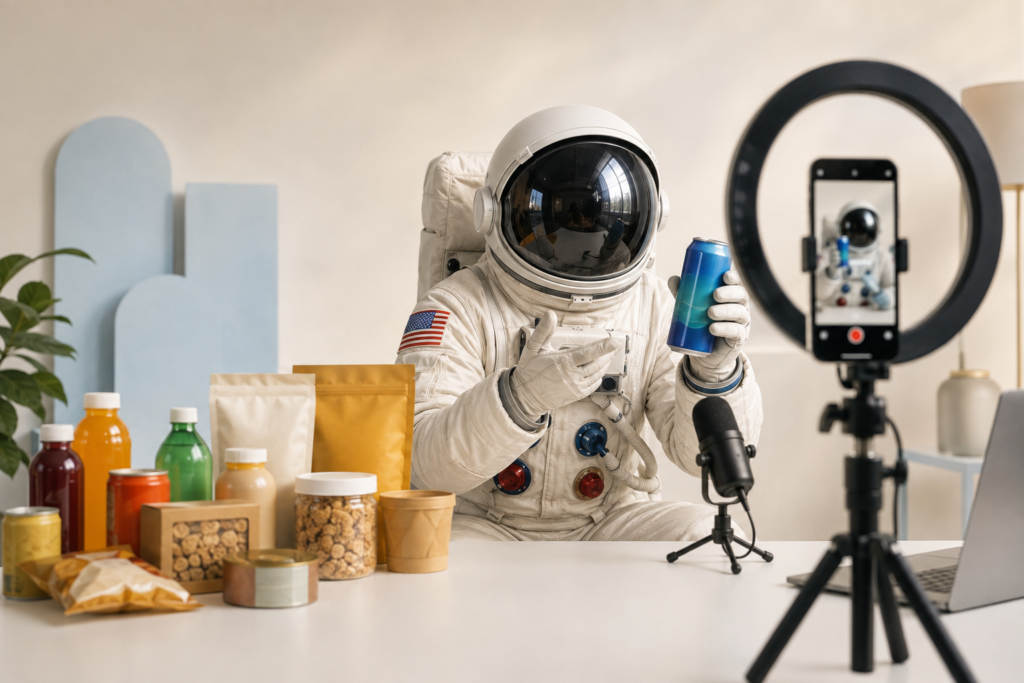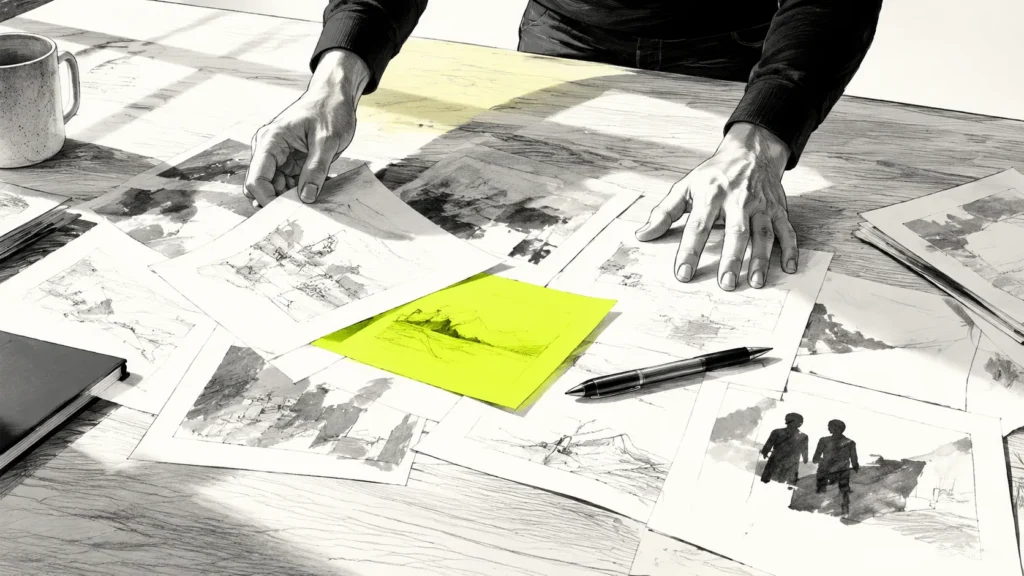



Social media content creation services are professional offerings that handle the strategy, production, and publishing of photos, videos, graphics, and copy for brand social channels. For founders juggling limited bandwidth or patchy output, hiring a specialist agency turns sporadic posting into a repeatable system with real numbers behind it. MAVRK Studio helps hospitality and consumer brands build that system with content tuned to the platforms, audiences, and formats driving growth today.
What Social Media Content Creation Services Actually Include
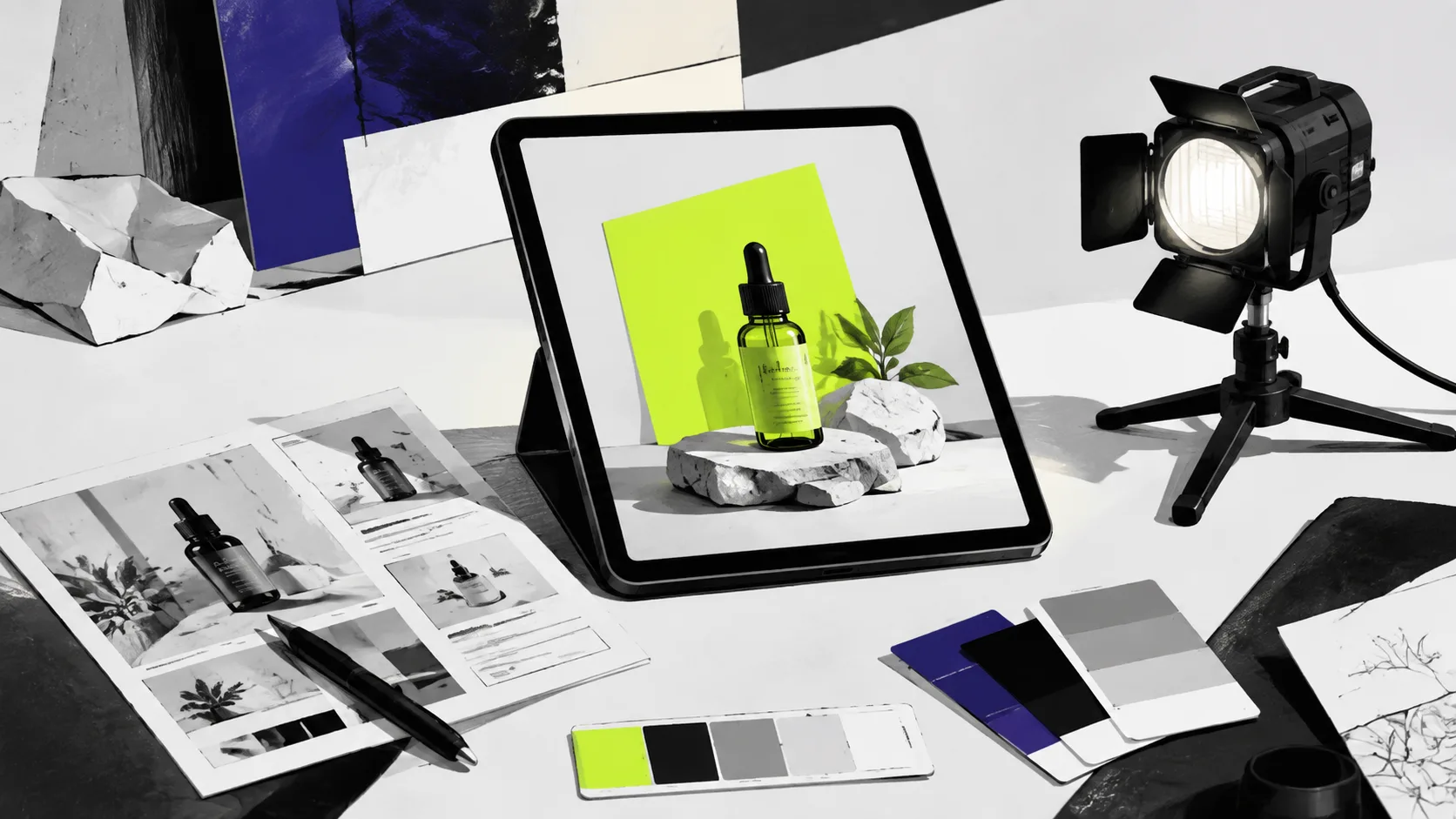
Most agencies bundle a wide production stack under one retainer: photo shoots, video, graphic design, copywriting, UGC management, and paid ad creative. The best ones also lead with strategy, mapping content pillars and platform priorities before a camera turns on. If you are building a modern consumer brand, that scope of work is what separates a partner from a freelancer. Our take on how brands can jumpstart their presence on social walks through the same starting checklist.
Core deliverable types
- Photo and video production, from studio product shots to lifestyle films.
- Graphic design for carousels, story templates, and ad units.
- Social copywriting adapted per platform.
- UGC sourcing, briefing, and approvals as a distinct workstream.
- Paid social creative built to be tested, not just shipped.
Platform-specific production considerations
LinkedIn rewards long-form posts and PDF carousels. TikTok and Instagram Reels demand short-form vertical video with native pacing. Meta ads live and die by iterative creative testing. A good agency treats each platform as its own dialect, not a translation. Our social marketing playbook for CPG brands breaks down how these formats map to real consumer categories.
Takeaway: if a proposal lumps every platform into one “social” line item, push back. Distinct formats need distinct production plans.
How the Content Creation Process Works
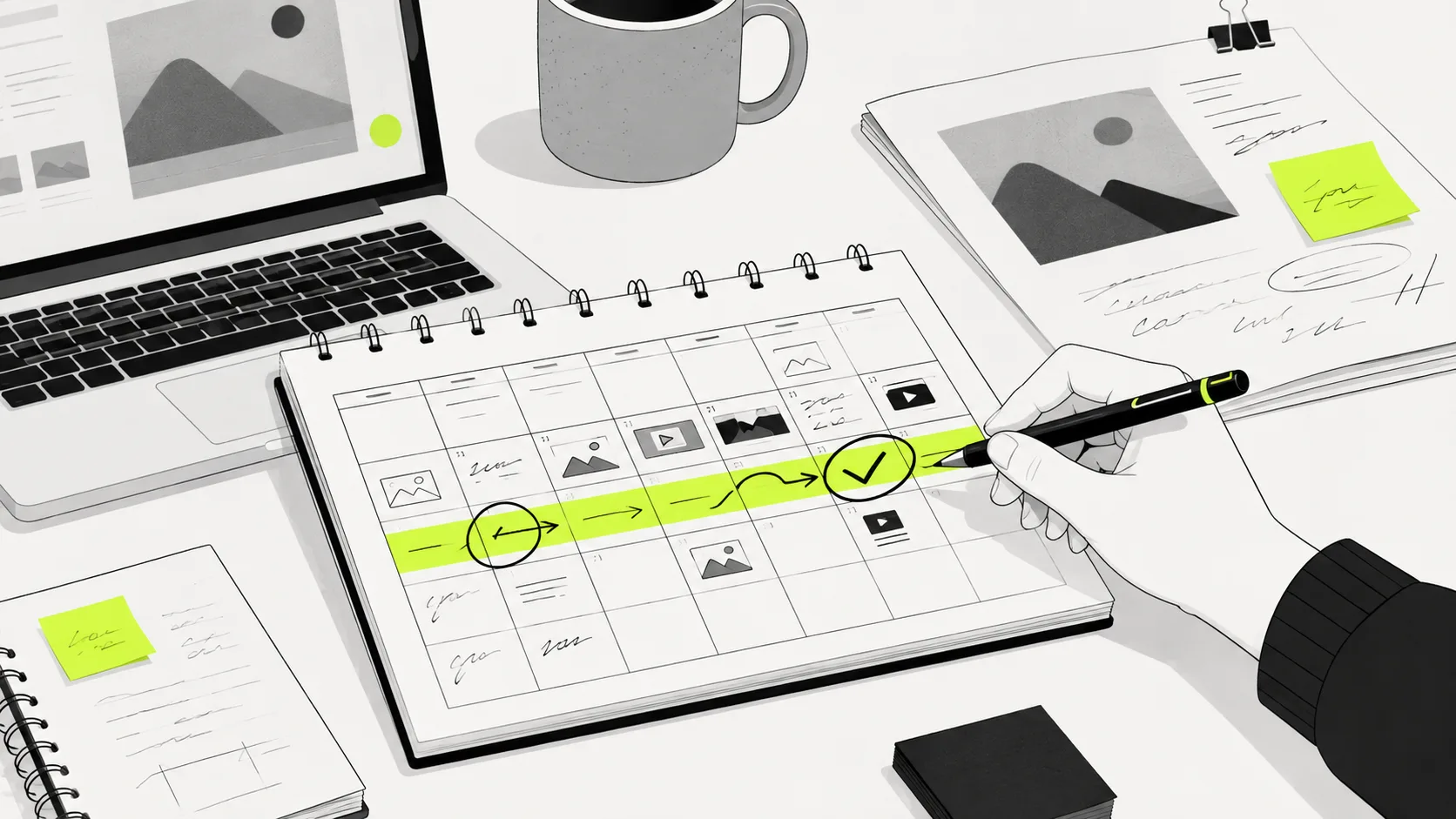
Behind every retainer there is a workflow. Discovery, production, review, publish, learn. Skip a step and the output feels random. Run the full loop and the calendar starts to build compounding value. A useful reference point: the difference between brand and marketing strategy shapes which of these phases your team should own versus outsource.
Discovery and strategy phase
Most engagements open with brand voice mapping, audience personas, competitive gap analysis, and platform goal-setting. This is the phase where a smart agency argues with your assumptions. If they nod through everything, that is a red flag. The psychology of branding is a good primer on the audience layer of this work.
Production and quality review
Production typically runs: concept development, creative brief approval, asset creation, multi-layer editorial review, delivery. Sculpt, a B2B-focused social agency, documents a process of testing varied organic formats to surface high-performing series before scaling production. That test-first mindset is what protects brand consistency without freezing it in place. Our own brand promotion stories and strategy notes show how that framework applies to consumer categories.
Publishing and performance tracking
Top-performing posts get refreshed on a cadence, not archived. Paid creative runs a parallel track to organic, iterating on hook, copy, and visual until ROAS holds. The feedback loop is the whole point. See our cost-effective marketing strategies for brands for how small teams keep this cycle running without a bloated stack.
Takeaway: the process should be documented, not improvised. Ask to see a sample workflow before signing.
Key Formats Agencies Produce for Social Media
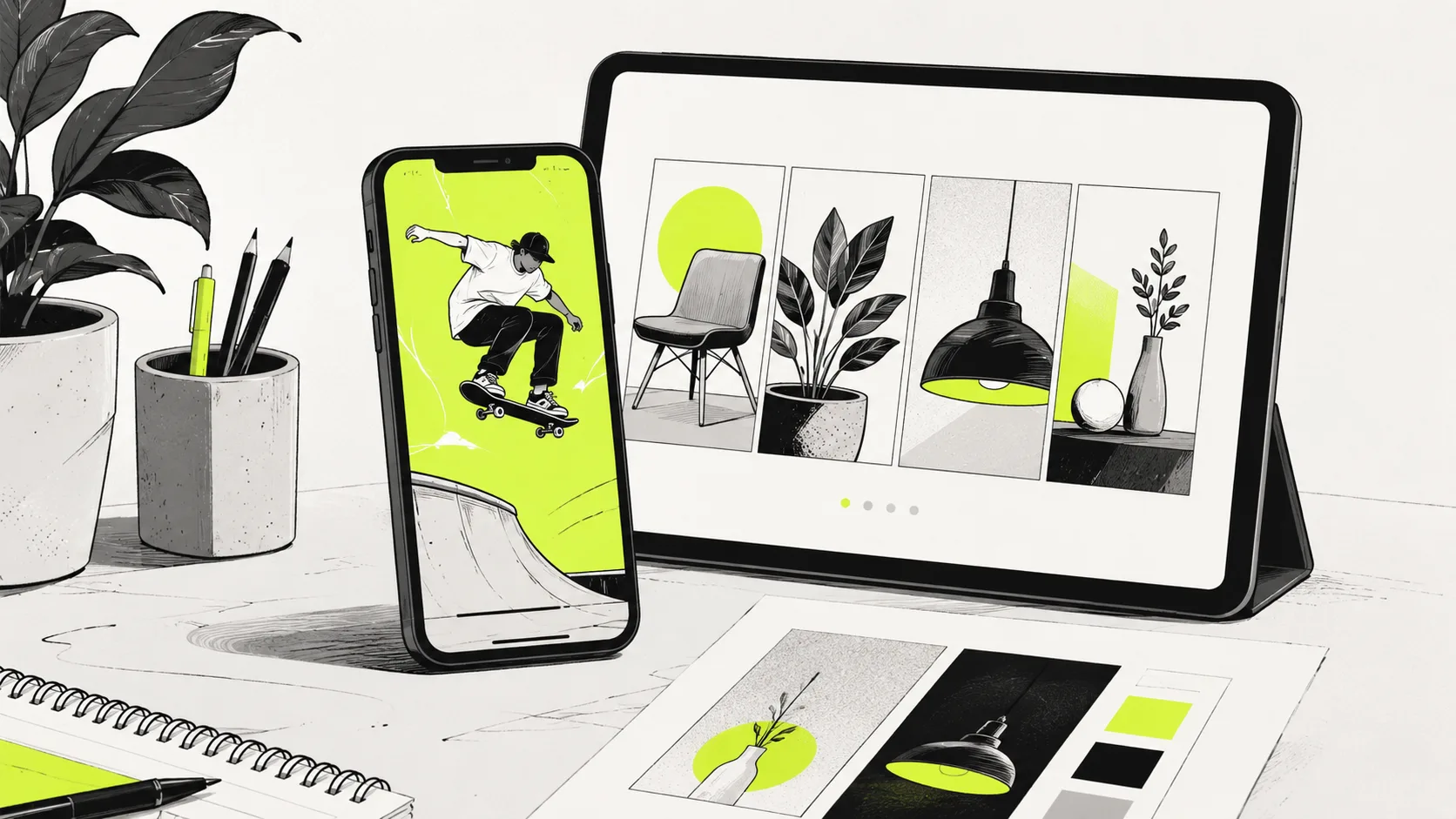
Deliverables have narrowed to a handful of high-value formats. Knowing which ones actually earn attention keeps your budget aligned with what platforms reward. Consumer brands in particular are seeing outsized returns from short video plus original photography, a combination we unpack in our food and beverage social guide.
Short-form video and reels
Vertical short video is the highest-demand deliverable in the market. Brands need both lo-fi, creator-style clips and polished, brand-produced variants. Running only one register misses half the audience. TikTok Shop has accelerated this shift for CPG, as covered in our TikTok Shop rundown.
Static graphics and photography
Original photography beats stock for brand differentiation, especially in food, beverage, beauty, and hospitality. Agencies with in-house studio capabilities can hold consistency across product, lifestyle, and editorial shoots. Carousel posts, infographics, story templates, and ad creatives usually build off an existing style guide. Our notes on packaging and brand identity explain why that visual consistency compounds off-platform too.
Copywriting and captions
Social copywriting adapts brand voice to platform norms: a single sharp line for Instagram, a longer narrative for LinkedIn, threaded punch for X. Motion graphics are also emerging as a differentiator for CPG and DTC brands whose products benefit from dynamic visual treatment. See our creative packaging designs breakdown for how visual voice translates from shelf to feed.
Takeaway: the mix matters more than any single format. A healthy content library carries variety in duration, register, and production polish.
How to Evaluate a Social Media Content Creation Agency

Not every shop is right for every brand. Fit is a function of industry knowledge, pricing structure, and reporting discipline. Our CPG branding strategy guide explains why category-specific expertise beats a generalist portfolio nine times out of ten.
Portfolio and industry fit
Industry specialization matters. Agencies focused on CPG and DTC (like BEGOOD in New York) or B2B SaaS (like Sculpt) bring platform and audience patterns that generalist shops simply do not have. When reviewing a portfolio, check whether organic and paid are treated as separate creative workstreams. If a case study reuses the same asset across both, the agency is not thinking about objectives. Our CPG advertising strategies notes show how those two tracks should diverge.
Pricing models and engagement structures
Pricing runs from project-based shoots to monthly retainers scoped by deliverable count. Custom pricing tied to projected ROI is a marker of performance-oriented shops. If a retainer sells hours but not outcomes, it is really a staffing agreement. Our consumer packaged goods social media guide covers the retainer questions worth asking upfront.
Reporting and accountability standards
Ask for follower growth rate, engagement rate by post type, reach per asset, and ROAS on paid creative. Red flags: identical content across all platforms, no before-and-after data, no view into which posts underperformed and why. Our take on brand builders versus product pushers captures the same mindset gap at the agency level.
Takeaway: you are hiring accountability as much as creative. Reporting cadence should be non-negotiable.
When to Hire a Service vs. Build In-House
The math is usually simpler than founders expect. If the cost of missed content opportunities, inconsistent posting, or weak creative exceeds the retainer, outsourcing wins. Our multicultural marketing and branding piece shows how the trade-off plays out for growth-stage consumer brands.
Brands with an internal strategist but no production capacity are ideal candidates for a hybrid model: keep strategy in-house, outsource photography, editing, and design. Early-stage brands often lack the headcount to hold a cadence across three or more platforms at once, which is exactly when a full-service retainer earns its keep. Our brand transformation notes walk through what that hand-off usually looks like in practice.
Agencies also unlock specialist roles like creative director, motion designer, and UGC coordinator that would be cost-prohibitive to hire individually at smaller content volumes. According to HubSpot’s State of Marketing reporting, platform-native content consistently outperforms cross-posted repurposing on engagement, which reinforces the case for specialist production over generalist output. Our AI-assisted social marketing overview covers where automation fits into that stack without replacing the humans.
Takeaway: the question is not agency or in-house. It is which parts of the pipeline each team owns best.
What Results to Realistically Expect
Expectations are half the deliverable. Set them wrong and even great work looks disappointing. Our lessons from growing a non-alcoholic beverage brand gets specific about what a 90-day window actually produces.
Organic growth benchmarks
Sculpt’s work with B2B manufacturer Velo3D contributed to 100 percent-plus LinkedIn follower growth and a 4x engagement lift through systematic format testing. According to Siege Media’s content services roundup, their content programs helped drive a 350 percent organic traffic increase for Instacart and $6.1 million in additional traffic value for Zapier, both built on competitive gap analysis. Realistic organic timelines run 90 to 180 days before compounding shows up. Our social media guide for food and beverage brands sets similar cadence expectations for consumer categories.
Paid creative performance indicators
Paid moves faster. ROAS and click-through data usually surface within two to four weeks, enabling rapid iteration. UGC consistently outperforms polished brand-produced ads on conversion rate for DTC and CPG, according to case studies from agencies like BEGOOD. Our color blocking and retail visibility piece covers how visual patterns from paid learnings feed back into physical brand presence.
Takeaway: organic is a slow build. Paid is a fast read. A good agency runs both clocks in parallel.
Frequently Asked Questions
How much do social media content creation services cost?
Retainers typically range from $3,000 to $20,000 per month depending on deliverable volume, video production complexity, and paid creative scope. Project-based shoots sit lower. Performance-oriented shops build pricing around projected ROI rather than flat hours.
What is the difference between social media management and content creation services?
Management covers scheduling, community response, and platform admin. Content creation produces the actual assets. Many agencies bundle both, but the disciplines are distinct and pricing for creative production should never be hidden inside management fees.
How many posts per month should a content creation agency deliver?
Typical retainers deliver 12 to 30 organic posts per month across two or three primary platforms, plus a variable number of paid creative variants. Volume matters less than fit; ten platform-native posts beat thirty cross-posted ones.
Do social media content creation agencies also run paid ads?
Most full-service agencies produce paid creative and can manage ad accounts, though some separate creative production from media buying. Ask whether paid creative iteration is included, since ad performance depends on running dozens of variants, not shipping one hero asset.
How long does it take to see results from a social media content agency?
Paid campaigns produce readable data in two to four weeks. Organic growth typically compounds over 90 to 180 days once a consistent cadence and format library are in place. Anyone promising viral outcomes in week one is selling optimism.
Can a content creation agency work with my existing brand guidelines?
Yes. Good agencies build off an existing style guide and extend it into social-native formats. If your guidelines are thin, expect a discovery phase to shore up visual and voice standards before production scales.
What platforms do social media content creation services typically cover?
Instagram, TikTok, LinkedIn, YouTube Shorts, Facebook, and X are the standard six. Pinterest and Threads are common add-ons for consumer brands. Coverage should be prioritized by where your audience actually spends time, not by checking every box.
Should a small business hire a social media content creation agency?
If content is a growth lever and internal bandwidth is short, yes. Retainers pay off fastest for brands past product-market fit that need cadence, not experimentation. Pre-launch brands often benefit more from a project engagement.
The Bottom Line
Social media content creation services solve a specific problem: turning creative ambition into consistent, platform-native output that actually moves numbers. The right partner brings strategy, production capacity, and reporting discipline in one stack, so your team can focus on the business. MAVRK Studio builds that engine for hospitality and consumer founders who want their social channels to feel like an extension of the brand, not a Tuesday scramble.