

A food and beverage marketing plan is the document that turns a great product into a recognized, revenue-generating brand. According to Creatives On Call, the global food and beverage market is projected to hit $8,905.5 billion by 2026. Standing out in that noise takes more than a good recipe. This guide walks you through a plan that earns awareness, loyalty, and sales, the same foundation MAVRK Studio builds with founders on day one.
What You’ll Need Before You Start
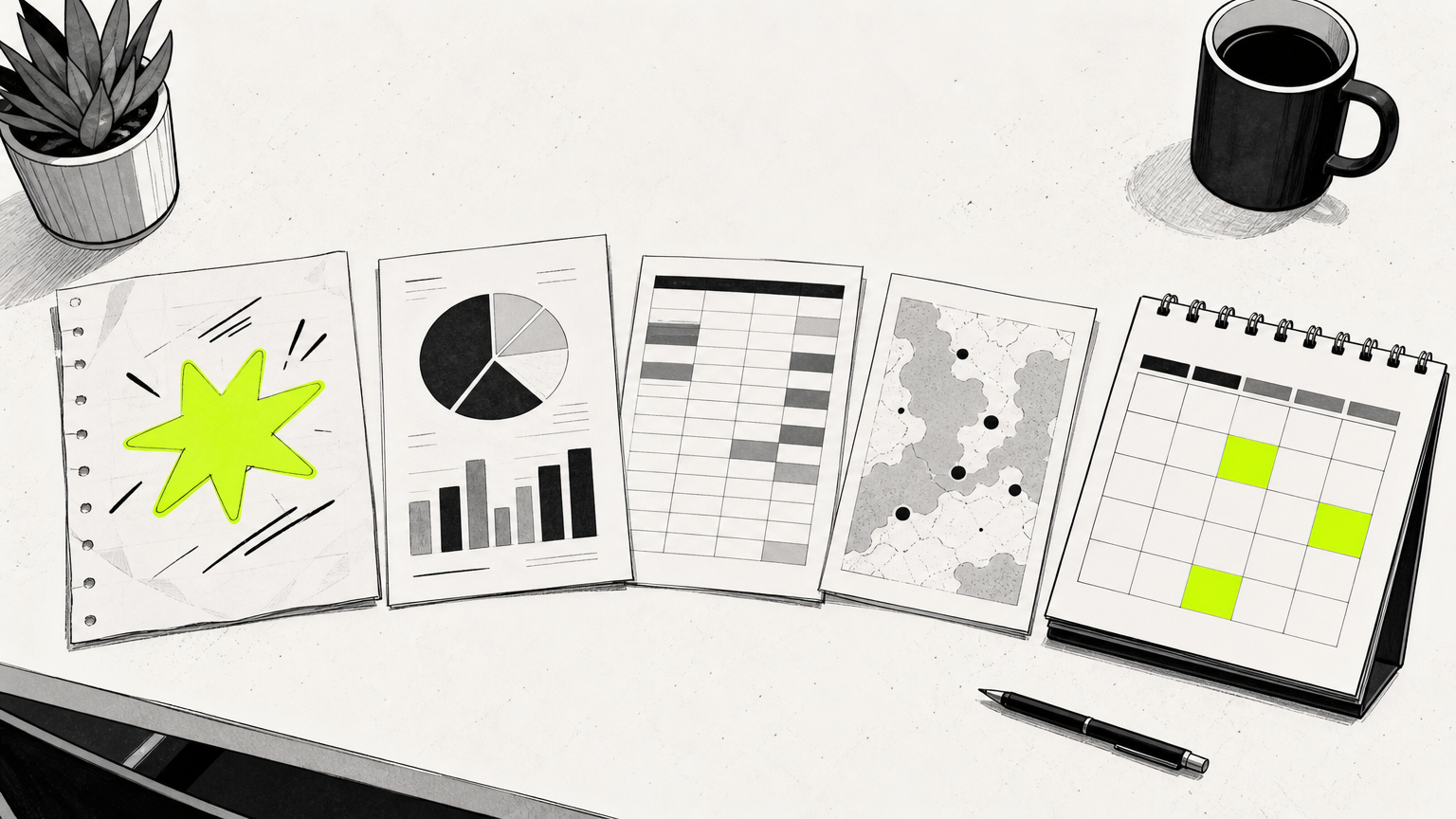
Before you open a doc and start typing “Marketing Plan v1,” get your inputs in order. A plan is only as sharp as the raw material behind it. Skip these and you will spend Q2 rewriting Q1. If you want a working example of how positioning shapes every downstream tactic, look at how restaurant branding agencies build profitable brands from a clear point of view first.
- A defined USP. One sentence that separates you on shelf, in feed, and in a buyer meeting. Not adjectives. A real point of difference.
- Market research tools. Customer surveys, Google Analytics, Meta and TikTok insights, social listening, and competitor benchmarks.
- A realistic budget range. Paid media, content production, sampling or events, software, and a small experimental bucket.
- Distribution clarity. Retail, DTC, foodservice, or ecommerce. Channel mix shapes every tactic downstream.
- A 12-month horizon with quarterly reviews. Long enough to see traction, short enough to correct.
Takeaway: if any of the five is missing, fix that first. Writing the plan without them is guessing in a nicer font. Our beverage industry marketing strategy breakdown is a good pressure test for your inputs.
Before You Start: Set Your Foundation
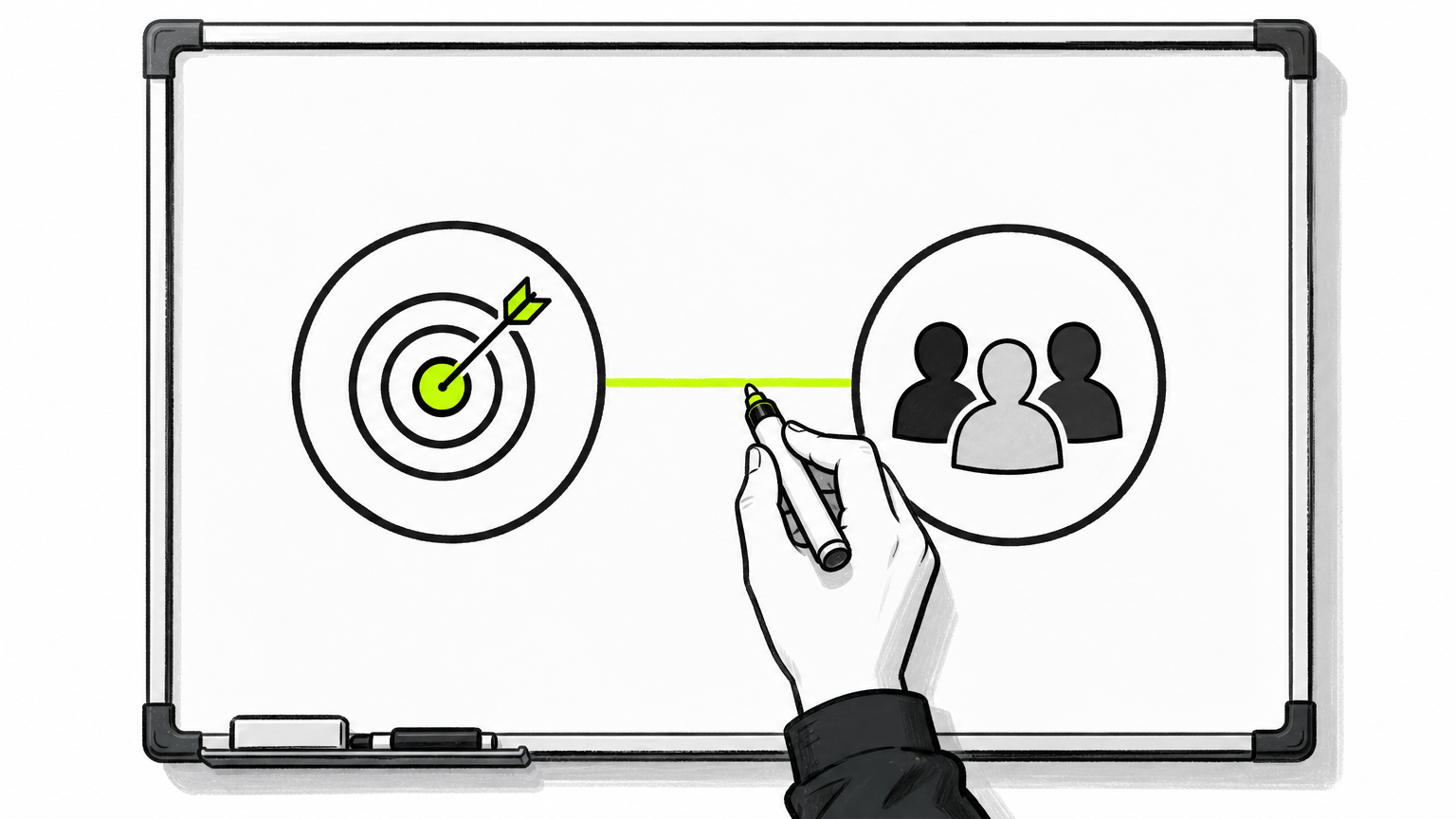
Foundation work is where most F&B plans win or fall apart. Two pieces matter more than the rest: goals and audience. Get these tight and the tactical section almost writes itself. Skip them and you end up with a Notion page full of vibes. The MAVRK approach to brand foundations treats these as non-negotiable before any campaign work begins.
Define Your Goals Using the SMART Framework
Common F&B marketing goals: more website traffic, higher social engagement, more retail or DTC sales, and stronger brand loyalty. Pick two or three, not eight. Then make each SMART. “Grow awareness” is a wish. “Increase unique website visitors by 20% in six months” is a target you can staff, budget, and measure. Founders who want a compressed sprint to hit those targets often start with the MAVRK 90-day system to force clarity fast.
Once goals are set, wire them to KPIs on day one. Every tactic in Section 3 has to ladder up to one of them, or it does not belong in the plan. Our cost-effective marketing playbook has more on picking KPIs that actually move revenue.
Know Your Target Audience
Audience research is not a persona deck you make once and file. It is a continuous dialogue. Use customer interviews, purchase data, surveys, and social listening. Segment by lifestyle, dietary preference, and purchase channel. A DTC cold-brew buyer and a Whole Foods shopper are not the same person even if the SKU is identical. Positioning your F&B brand for social starts with knowing who you are actually talking to.
Look at energy and sports drinks: primary consumers skew male, 18 to 34, and the category built its whole channel mix around gyms, athletics, and stunt-friendly content. Tight audience, tight tactics, big share. Your category needs the same discipline. For a real-world audience-led build, see how we shaped The Rice Cream around a specific consumer moment.
Takeaway: goals give the plan direction, audience gives it accuracy. You need both.
Step-by-Step: How To Build Your Food and Beverage Marketing Plan
Here is the working sequence. Do it in order. Skipping ahead is how brands end up spending on TikTok before they can answer why they exist. If you want proof this sequence produces work, our MAVRK case studies show how positioning drives creative, media, and packaging in that order.
Step 1: Audit Your Current Brand Position
Action: audit packaging, messaging, pricing, website, and social presence against your top three direct competitors. Outcome: a one-page snapshot of where you are stronger, weaker, or invisible. Verification: you should be able to write a single sentence that describes your position relative to the category. If you can’t, the audit is not done. Use our brand builder vs product pusher framing to check if you are auditing brand or just SKU features.
Step 2: Choose the Right Marketing Channels
Action: pick channels based on where your audience actually spends time and how they buy. Instagram and TikTok for visual-first food and drink. Email and SMS for DTC repeat purchase. Google Search for high-intent product queries. Retail media if you are on shelf. Outcome: a shortlist of two to four primary channels, not ten. Verification: each channel has a documented reason tied to audience or purchase behavior. Our F&B social media and AI playbook is a fast way to sanity-check the social slice.
Step 3: Build Your Content and Campaign Strategy
Action: split your calendar into demand generation (blogs, social content, influencers, UGC) and lead generation (email capture, webinars, sampling, tastings). Outcome: a quarterly content calendar with themes, hero campaigns, and always-on posts. Verification: every post has an owner and a KPI. For trend-native content that actually converts, see how we approach food TikTok trends.
Step 4: Plan for In-Store and Experiential Tactics
Action: coordinate in-store sampling, shelf placement, and experiential moments with retail partners. According to Enabled, in-store sampling produces dramatic short-term sales lifts and builds personal brand connection. Outcome: a sampling calendar tied to key retail windows. Verification: each activation has a sell-through target the retailer agrees to. Packaging carries this weight too, which is why we treat beverage packaging design as a marketing decision, not a production one.
Step 5: Set Your Budget and Assign Ownership
Action: allocate budget across channels using a 70/20/10 split, proven, emerging, experimental. Outcome: every line item has an owner, a timeline, and a KPI. Verification: you can pull up any tactic and name the person accountable. This is the step that quietly kills most plans. For pricing context on what agency vs in-house allocation actually costs, see our restaurant branding pricing guide.
Key Channels and Tactics for Food and Beverage Brands
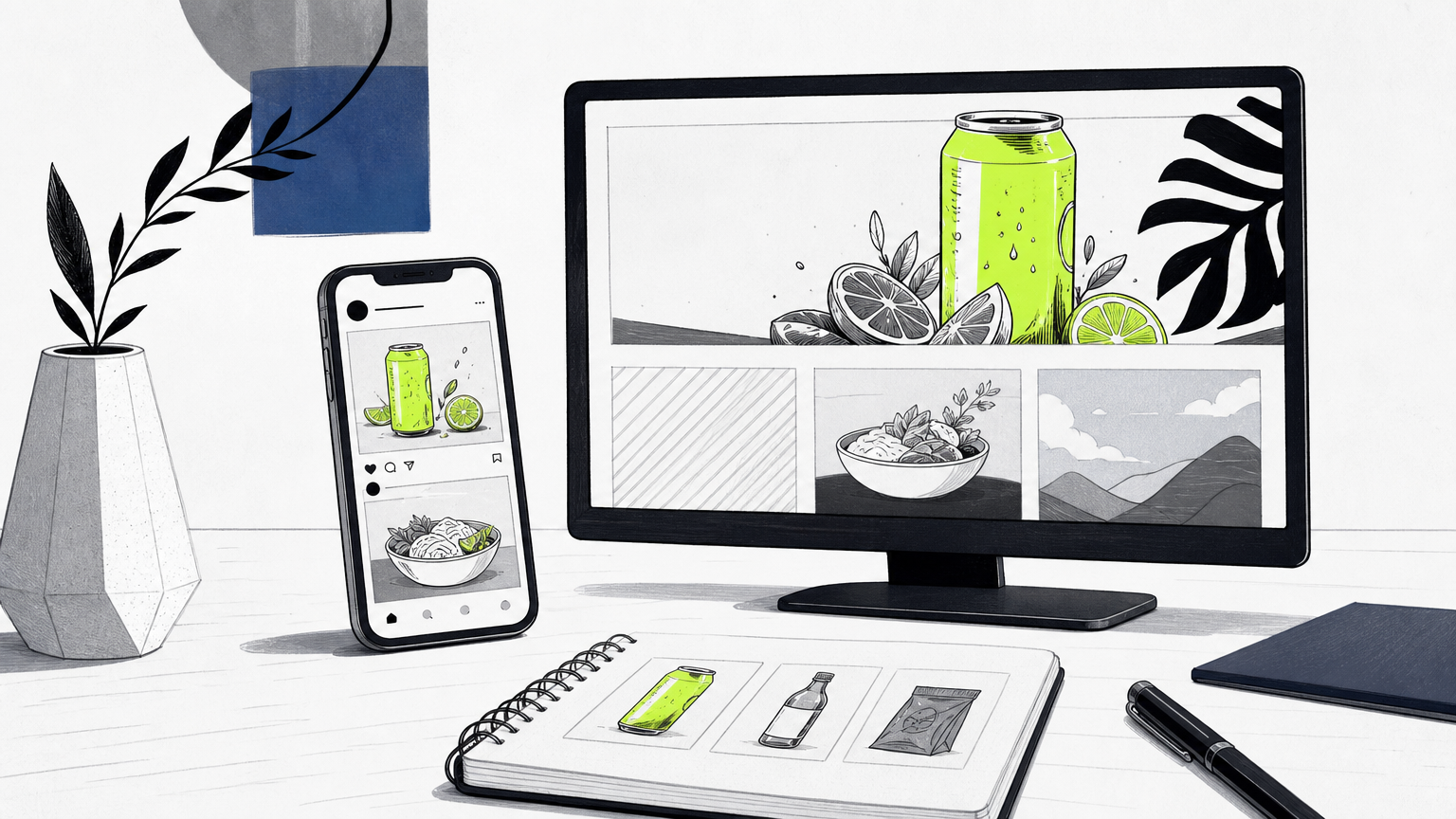
Not every channel deserves your time. These are the ones that consistently return for F&B brands, plus how to run them without wasting spend. If you are still building the retail conversion side, our CPG website design guide covers the DTC half of the mix.
Social Media and Influencer Marketing
Instagram and TikTok are still the center of gravity because F&B is appetite-driven and visual. User-generated content extends reach without proportional ad spend, and creator partnerships buy trust that ads cannot. Match creators to your audience, not their follower count. See our MAVRK work with Edenesque for how content-led launches look in practice.
Loyalty Programs and Promotions
Promotions like sweepstakes, BOGO, and gift-with-purchase drive trial in crowded CPG categories. Loyalty programs, especially app-based rewards after repeat purchase, retain buyers and hand you first-party data on behavior. That data becomes the next quarter’s targeting. Our CPG advertising strategies for F&B brands shows how to wire promotions into paid media without cannibalizing margin.
Trade Shows and Wholesale Outreach
Trade shows, Expo West, Fancy Food, regional buyer days, are still where wholesale relationships get built. Tasting events put product in the hands of retail buyers and foodservice distributors who cannot buy what they have not tried. Bring a tight one-sheet, samples, and a follow-up plan. For coffee and specialty categories, our coffee branding guide has more on translating booth energy into orders.
Takeaway: packaging is a channel too. A redesign can reposition a brand and pull in new demographics without changing the formula, which is why packaging design mistakes for F&B brands is worth reading before your next print run.
Troubleshooting Common Food and Beverage Marketing Plan Failures
Plans fail in predictable ways. Diagnose the symptom, then apply the fix. If you want a full launch scaffolding around these fixes, the MAVRK 90-day brand launch guide is a good starting point.
Symptom: Low Social Engagement Despite Regular Posting
Cause: content is product-focused, not story or value-led. Fix: shift the mix toward lifestyle content, recipes, behind-the-scenes footage, and UGC reposts. Product hero shots are the seasoning, not the meal. Our social media jumpstart guide has the ratio we recommend.
Symptom: Retail Velocity Is Flat After Launch
Cause: no in-store activation or sampling to drive trial. Fix: coordinate sampling events with retail partners in the first 90 days, pair with endcap or shelf-talker support, and track sell-through weekly. For a launch case where velocity and story worked together, see our Folkland project.
Symptom: Budget Is Exhausted Mid-Year With Unclear ROI
Cause: spend was never tied to specific measurable objectives. Fix: rebuild allocation around KPIs, adopt the 70/20/10 split, and move the plan out of a static doc into a shared project tool with monthly reviews. Ownership without visibility is not ownership. Talk to us via the MAVRK contact page if you need a second pair of eyes on the rebuild.
Frequently Asked Questions
What should be included in a food and beverage marketing plan?
Include your USP, target audience, SMART goals, channel strategy, content calendar, budget allocation, ownership assignments, and KPIs. Add a competitive audit and a quarterly review schedule so the plan stays a working document, not a filed one.
How long should a food and beverage marketing plan be?
Aim for 15 to 30 pages for a growth-stage brand. Long enough to cover positioning, audience, channels, budget, and KPIs. Short enough that your team actually reads it. Executive summary up front, tactical detail in appendices.
What is the difference between a food and beverage marketing strategy and a marketing plan?
Strategy is the why and where: positioning, audience, competitive stance. The plan is the how and when: channels, campaigns, budget, timeline, owners. Strategy sets direction. The plan turns direction into weekly execution and measurable outcomes.
How do small food and beverage brands compete with larger companies on a limited budget?
Small brands win on specificity. Pick a tight audience, a sharp point of view, and one or two channels you can dominate. Trade broad reach for deeper community, creator partnerships, and packaging that punches above weight.
Which digital marketing channels work best for food and beverage brands?
Instagram and TikTok for visual and appetite appeal, email for DTC retention, Google Search for high-intent buyers, and connected TV or Meta ads for scaled awareness. Retail media networks matter increasingly for brands on shelf.
How often should a food and beverage marketing plan be reviewed and updated?
Review quarterly, refresh annually. Monthly KPI check-ins keep tactics honest. Rewrite the plan fully once a year or after a major shift, new distribution, new SKU line, funding round, or a category disruption you cannot ignore.
What role does packaging play in food and beverage marketing?
Packaging is your loudest marketing asset. It sells at shelf in three seconds and shapes every product photo, ad, and unboxing video. Redesigns can reposition a brand and unlock new demographics without touching the formula inside.
How do loyalty programs help food and beverage brands grow revenue?
Loyalty programs lift repeat purchase rate, raise average order value, and generate first-party data on buying behavior. That data sharpens targeting for paid media and product development, compounding value well beyond the discount cost.
Conclusion
A food and beverage marketing plan is not paperwork. It is the operating system that connects your positioning to your P&L. Nail the foundation, run the five steps in order, pick the channels your audience actually uses, and troubleshoot on symptoms instead of vibes. If you want a partner who thinks in brand and revenue at the same time, MAVRK Studio’s launch program is built for founders shipping into a crowded category.