

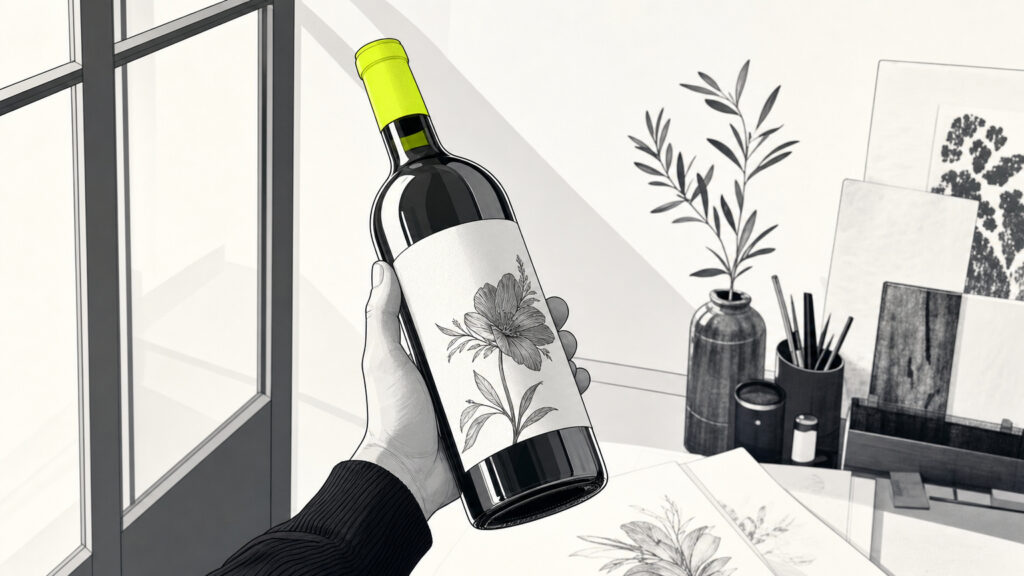
Wine label design is the visual face of a bottle, shaping first impressions before a single drop is poured. A good label communicates varietal, origin, and personality in a space no bigger than a playing card. Whether you are launching a boutique winery, bottling a private-label gift run, or refreshing an existing SKU, understanding the process helps you spend smart. MAVRK Studio builds labels for producers who want their bottles to hold the room on shelf.
What Wine Label Design Actually Involves
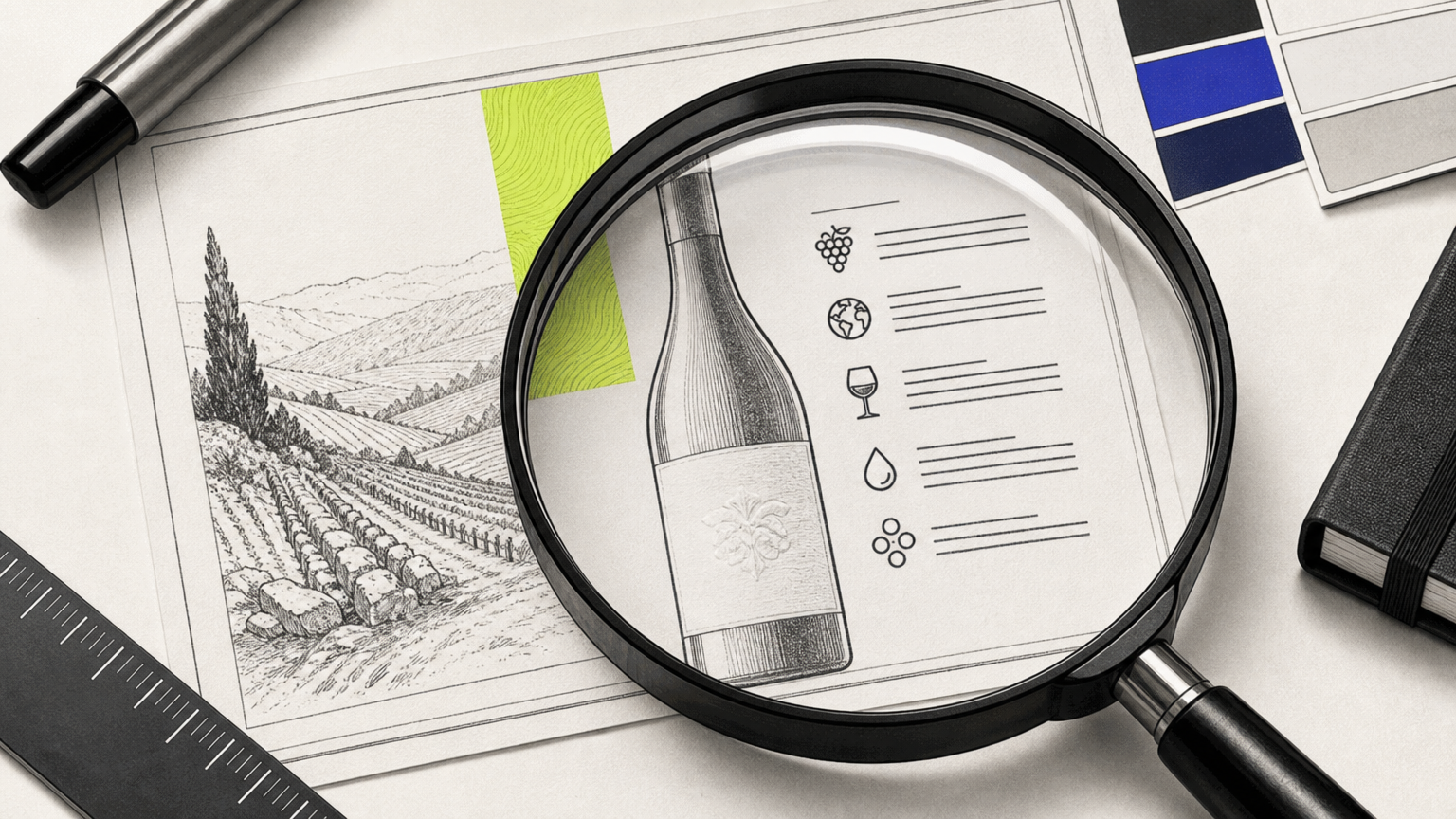
A wine label is not decoration. It is the last piece of marketing before purchase and the first piece of brand memory after. In most markets, regulators demand a specific set of disclosures: producer name, country of origin, ABV, net volume, and a sulfite declaration. That leaves a tight strip of real estate for anything resembling story, which is exactly why wine packaging design has to earn every millimeter.
More Than Aesthetics: The Strategic Role of a Label
Think of the label as positioning made physical. Typography choices telegraph price tier. Color signals varietal category. Imagery hints at whether this bottle belongs at a natural wine bar or a steakhouse cellar. Because most wine buyers pick without tasting, the label often carries the entire persuasion load, which is why strong product label design is treated as a revenue lever, not a finishing touch.
Mandatory Legal Elements vs. Creative Real Estate
Bottle shape dictates format. A standard Bordeaux bottle typically takes a 4 by 3.5 inch front label, while slender Hock bottles suit narrower vertical layouts and Burgundy shapes favor wider proportions. Neck labels, back labels, and capsules are separate design assets, and coordinating them into a single packaging system is where a proper brand identity partner earns their fee. One sticker is a print job. A system is a brand.
Takeaway: treat the front, back, neck, and capsule as one connected canvas, not four unrelated deliverables.
The Wine Label Design Process Step by Step
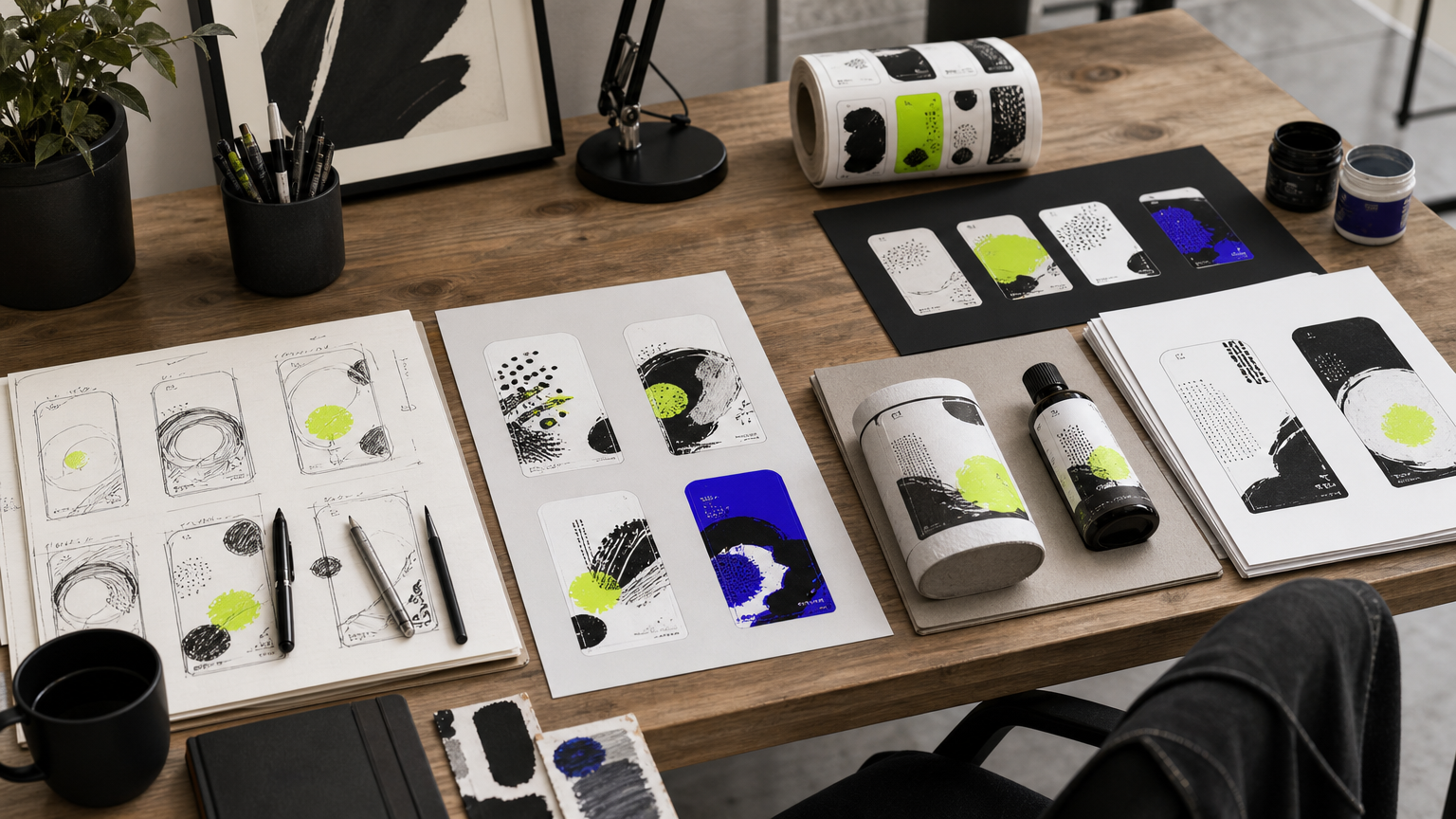
Every studio has its own rhythm, but the spine of a professional engagement looks similar across the industry. Expect four phases: discovery, concept, revision, and print handoff. Skipping any one of them is the fastest way to end up with a beautiful design that cannot actually be printed on your chosen bottle.
Discovery and Brief
A good brief covers target consumer, retail price point, varietal or appellation, bottle shape, distribution channel, and the emotional tone you want to hit. Producers who arrive with a clear sense of shelf competition and buyer profile shorten the project by weeks, which mirrors the discovery approach used in most brand-building engagements.
Concept Development and Typography
Most studios present two to three concept directions in the first round: often one illustrative, one typographic, one photographic or abstract. Typography carries disproportionate weight because label text density is high, and getting the type wrong is like getting the logo language wrong for a food and beverage brand. Serifs read heritage. Sans-serifs and scripts read modern or approachable. Custom lettering reads premium.
Revision Rounds and Artwork Approval
Studio contracts usually cap revisions at two to three rounds, with additional rounds billed hourly. Founders who circulate concepts to a committee of ten inevitably blow through that cap, so nominate one internal decision-maker before the first presentation. Solid creative direction on any launch requires a single point of taste, not a democracy.
Print-Ready File Handoff
Final artwork is typically delivered as vector files (AI or EPS) with embedded fonts, CMYK color profiles, and dielines supplied by your printer. Bleed, safe zones, and foil layers need to be built in separate spot channels. A studio that also knows how to prep files for ecommerce and DTC channels will hand you web-ready mockups in the same package.
Takeaway: the deliverable is not a JPG. It is a production kit your printer can run without emailing back questions.
Wine Label Design Styles and Visual Trends
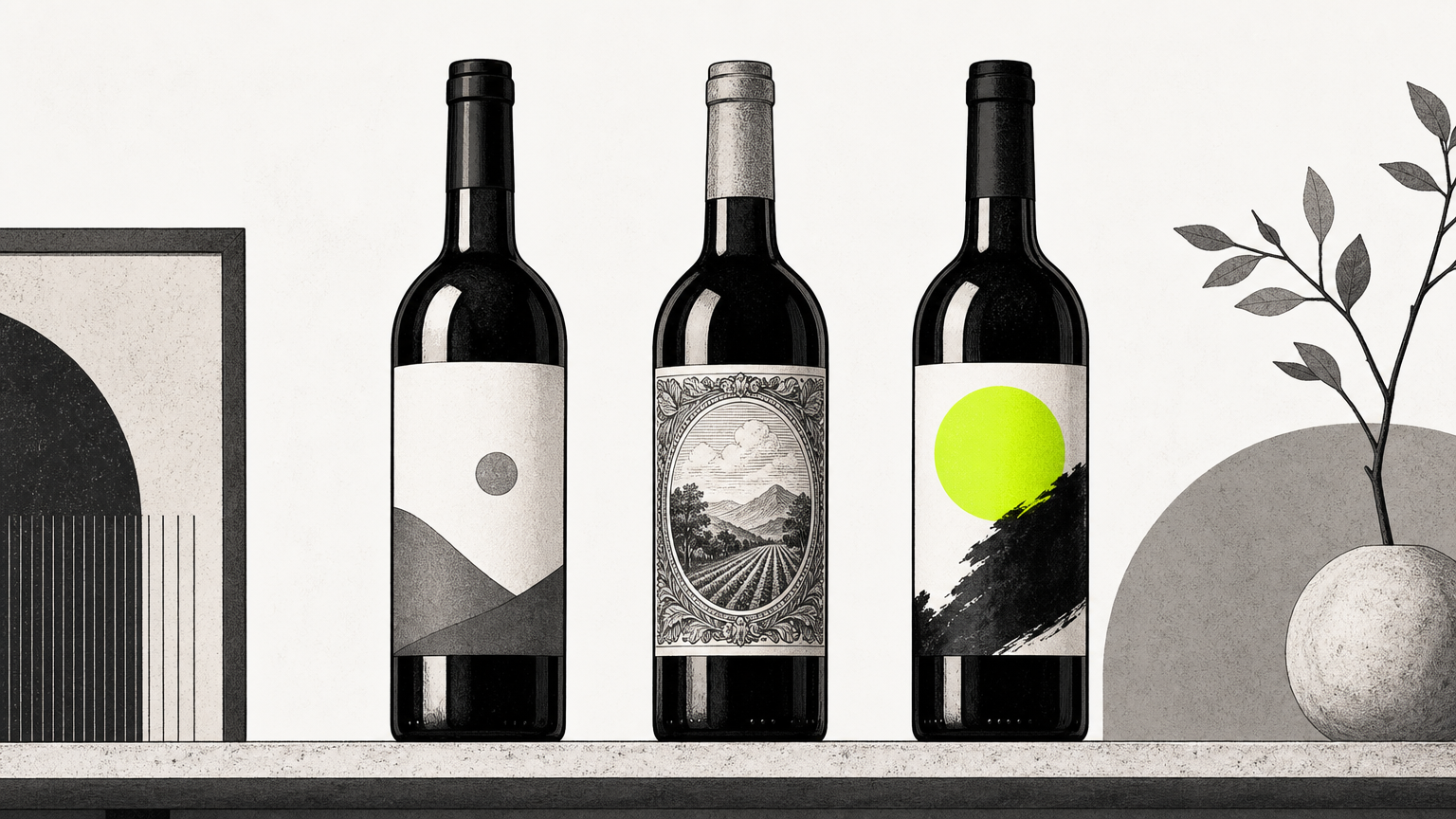
Style is not decoration either. It is a signal about who the wine is for and where it belongs.
Classic and Heritage Aesthetics
Crests, serif typography, estate illustrations, muted palettes. Classic labels dominate old-world categories like Bordeaux and Burgundy because tradition is the product. If your positioning leans legacy, this vocabulary reads as credibility, and it pairs naturally with heritage-driven brand-building strategy.
Modern Minimalist and Illustrative Approaches
Bold color blocks, hand-drawn illustration, whimsical animals, unconventional die-cut shapes. Modern labels are how new-world producers steal shelf space from incumbents, and the approach mirrors the CPG social branding playbook more than the traditional wine trade. Minimalist labels with white space and single-color type perform strongly in premium and natural wine segments, where restraint signals confidence.
Choosing a Style That Fits Your Brand
Illustrative labels with custom artwork carry higher per-unit design cost but generate stronger social shareability and recall. Style must also align with retail channel: a label optimized for on-premise wine lists reads differently from one designed for grocery shelf at eye level, a distinction any beverage marketing strategist will drill into during briefing.
Takeaway: pick a style that matches the room your bottle will be sold in, not the mood board you like on Pinterest.
Wine Label Design Pricing: What to Expect
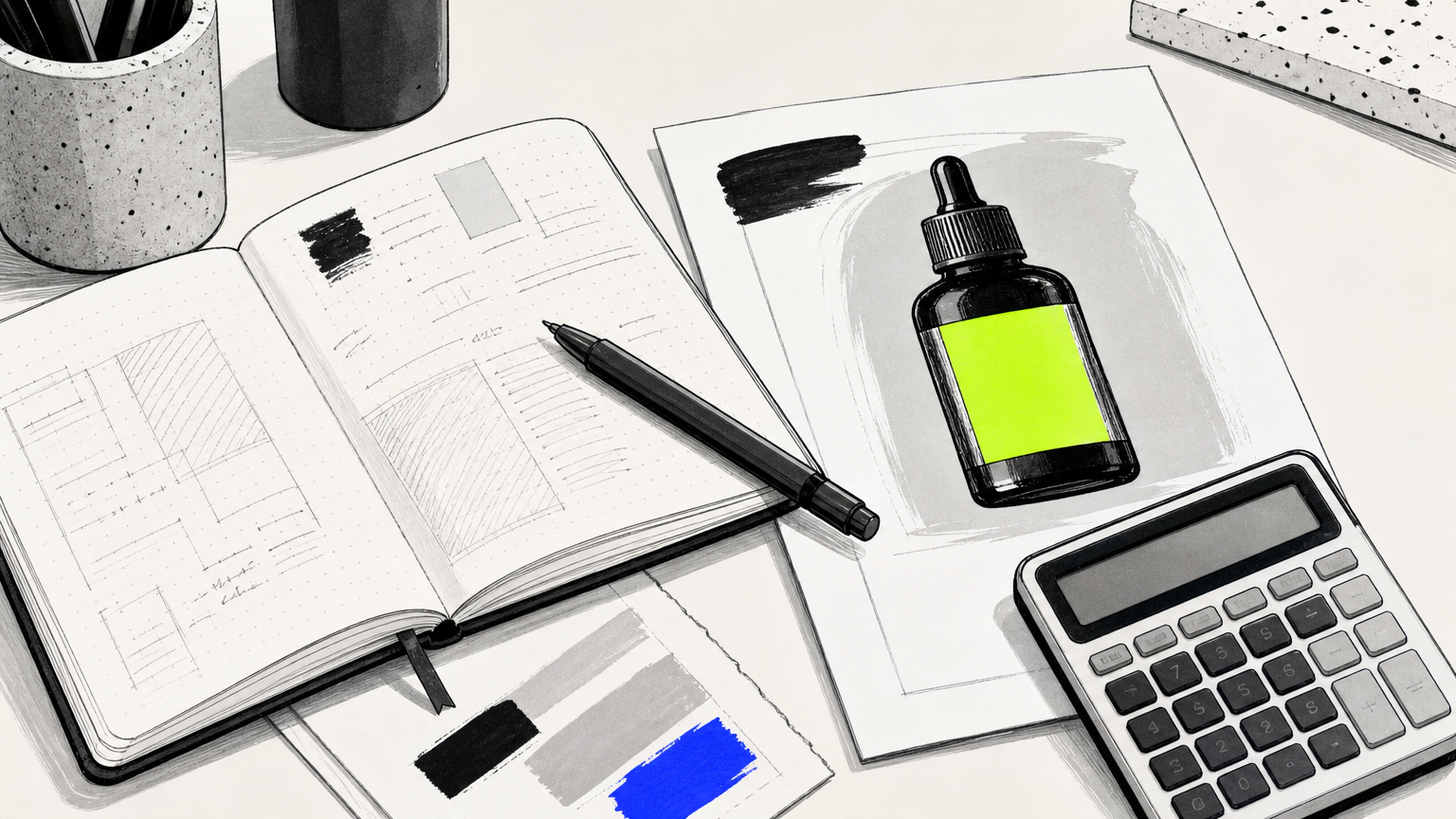
Budgets swing wildly, so anchor your expectations to the level of service you actually need.
DIY and Template Tools vs. Professional Studios
Canva, Adobe Express, and template marketplaces will get you a label for close to nothing. What they will not give you is strategy, custom illustration, dieline-accurate print files, or anyone accountable when the artwork rejects at the printer. For a personal gift run this is fine. For a commercial SKU it usually is not, which is why founders eventually reach for a proper beverage brand build.
Freelancer vs. Boutique Design Agency
Freelance wine label designers typically charge $300 to $1,500 per label depending on complexity, illustration scope, and revision cap. Boutique branding studios that include discovery, strategy, multiple concepts, and full print-ready delivery generally run $2,000 to $8,000 or more for a complete label system. The gap reflects strategy and print-production expertise, not just hours, and shows up clearly in product launch outcomes.
What Drives Cost Up or Down
Custom illustration, hand lettering, foil, embossing, and specialty die-cuts all add cost because they require specialist skills and tighter printer coordination. Printing is a separate line item: according to BottleYourBrand, short-run digital labels can start from about $0.21 per label at volume, while premium substrates with foil or textured finishes carry significantly higher per-unit costs. Factor both into total budget the way you would any CPG launch spend.
Takeaway: design and print are two separate budgets; underfunding either wrecks the other.
Common Wine Label Design Mistakes to Avoid
Most reprints are caused by preventable errors. Here are the ones that show up most often.
Ignoring Legal Compliance Requirements
Omitting the sulfite advisory or the US government health warning required by the TTB is one of the fastest routes to a rejected shipment. Compliance is not glamorous work, but skipping it invalidates the entire run, which is why serious CPG label strategy treats regulatory text as a first-class design element.
Choosing the Wrong Label Material for the Bottle Format
Paper labels absorb moisture and peel in ice buckets. Synthetic or polypropylene stocks stay put in wet environments. If your wine sells chilled, the material decision is a brand-preservation decision, not an aesthetic one, and it deserves the same rigor as any packaging concept exploration.
Skipping the Physical Mockup Stage
A design that looks strong on screen can fail on a bottle because of curvature, label placement height, or paper texture. Press proofs and 3D bottle mockups catch these before full print runs. Low-resolution imagery or raster logos will also pixelate in print; supply everything at 300 dpi minimum or as vector files. And do not neglect the back label: tasting notes, producer story, and a QR code can extend the brand experience the same way a well-built Shopify storefront extends the buying moment.
Takeaway: print a physical proof before you print ten thousand.
How to Brief a Designer for Your Wine Label Project
The quality of your brief sets the ceiling on the quality of your label. Do the homework before you sit down.
Information to Gather Before the First Meeting
Bring reference labels you admire and, just as important, labels you want to avoid. Visual references communicate aesthetic preferences faster than any adjective. Nail down production volume and retail price point in advance, because those two numbers determine how much printing budget survives after design, and they shape the same trade-offs a DTC brand-building process works through.
Questions to Ask a Potential Design Partner
Ask for wine-specific portfolio work. Packaging design requires print knowledge that differs sharply from digital or marketing design, closer in discipline to logo craft for consumables than to web work. Clarify IP: a professional studio should transfer full print rights on final payment, covering unlimited production runs. Confirm turnaround against your bottling schedule; four to eight weeks from signed brief to print-ready artwork is a reasonable studio quote, and it should map cleanly to any hospitality or launch marketing calendar you are running in parallel.
Takeaway: the best briefs come from founders who already know what they don’t want.
Frequently Asked Questions
How much does it cost to design a wine label?
Freelance wine label design typically runs $300 to $1,500 per label. Boutique studios offering strategy, multiple concepts, and full print-ready delivery generally range from $2,000 to $8,000 or more for a complete label system.
What information is legally required on a wine label?
Most markets require producer name, country of origin, alcohol by volume, net contents, and a sulfite declaration. In the US, the TTB also mandates a government health warning. Requirements vary by export market, so check destination rules early.
How long does wine label design take from start to finish?
Professional studios typically quote four to eight weeks from signed brief to print-ready artwork. Custom illustration, foil specification, and multiple rounds of stakeholder review can extend that. Rush turnarounds are possible but usually carry a fee.
Can I design my own wine label without a graphic designer?
You can, using tools like Canva or Adobe Express. For personal gift runs it works fine. For commercial SKUs the lack of strategy, custom typography, and printer-ready file preparation usually shows up as reprints, rejected artwork, or weak shelf performance.
What file format does a wine label designer deliver for printing?
Print-ready artwork is delivered as vector files, typically AI or EPS, with embedded fonts, CMYK color profiles, and printer-supplied dielines. Foils, embosses, and spot varnishes are built as separate spot-color channels layered above the base artwork.
What is the standard size for a wine bottle label?
Bordeaux bottles usually take a 4 by 3.5 inch front label. Burgundy shapes suit wider 3.5 by 4 inch or square formats. Slender Hock and dessert bottles use taller, narrower vertical labels, roughly 2 by 4 inches.
How do I choose the right label material for wine bottles?
Match material to environment. Paper stocks work for room-temperature reds. Synthetic or polypropylene stocks resist moisture and belong on chilled whites, rosés, and sparkling wines that live in ice buckets. Ask your printer for material samples on your actual bottle.
Do I need a separate designer for the back label and neck label?
Not a separate designer, but treat them as separate design assets within one system. Front, back, neck, and capsule should share typography, color, and voice. A studio delivering only a front label is delivering half a package.
Bringing It All Together
A wine label is a small object doing enormous work: legal disclosure, brand positioning, shelf differentiation, and social currency, all inside a few square inches. Get the process right and the label pays for itself many times over. Get it wrong and you reprint. If you are weighing a first release or a rebrand, the team at MAVRK Studio builds label systems that hold their own on shelf and travel cleanly across every channel your bottle needs to live in.