



Social media management and content creation services cover everything from building a posting strategy to producing graphics, short-form video, and copy, then scheduling and monitoring results across platforms. For brands that lack the time or in-house skills to stay consistent, a managed service fills the gap without sacrificing brand voice. MAVRK Studio helps hospitality and consumer founders navigate this space with a clear, results-oriented approach rooted in brand identity work for hospitality and consumer brands.
What Social Media Management and Content Creation Services Actually Include

Full-service packages bundle strategy, production, publishing, community management, and monthly reporting into a single monthly fee. The point is coverage. You get a team that owns the calendar instead of a freelancer who owns one deliverable. That structure matters most for food and beverage brands running lean social teams, where consistency is the whole game.
Strategy and Content Planning
Strategy is the map. A good provider audits your current channels, defines audience segments, sets content pillars, and ties every post to a business outcome. That outcome could be lead volume, retail sell-through, or reservations. The plan then locks the cadence: how many posts, which formats, which platforms. Skip this step and you get pretty content that sells nothing, a gap covered in more depth in this piece on brand strategy vs marketing strategy.
Content Production: Graphics, Copy, and Video
Production is where the calendar becomes real assets. Expect custom graphics, branded captions, short-form video for Reels and TikTok, carousels, Stories, and UGC-style clips. The best teams shoot original footage or direct you on capture, then edit to platform specs. Quality here separates studios from post-schedulers, which is why we push clients toward creative marketing that actually differentiates CPG brands.
Scheduling, Publishing, and Community Management
Once assets are approved, they get scheduled across Instagram, Facebook, TikTok, LinkedIn, Pinterest, YouTube, X, and Google Business Profile. Community management is the other half: replying to comments and DMs, engaging outbound with tagged audiences, and defending brand voice in every reply. That voice work is closer to restaurant brand psychology than to customer service scripts.
Takeaway: a real service owns strategy, production, publishing, and conversation, not just the scheduling calendar.
How the Service Delivery Process Works
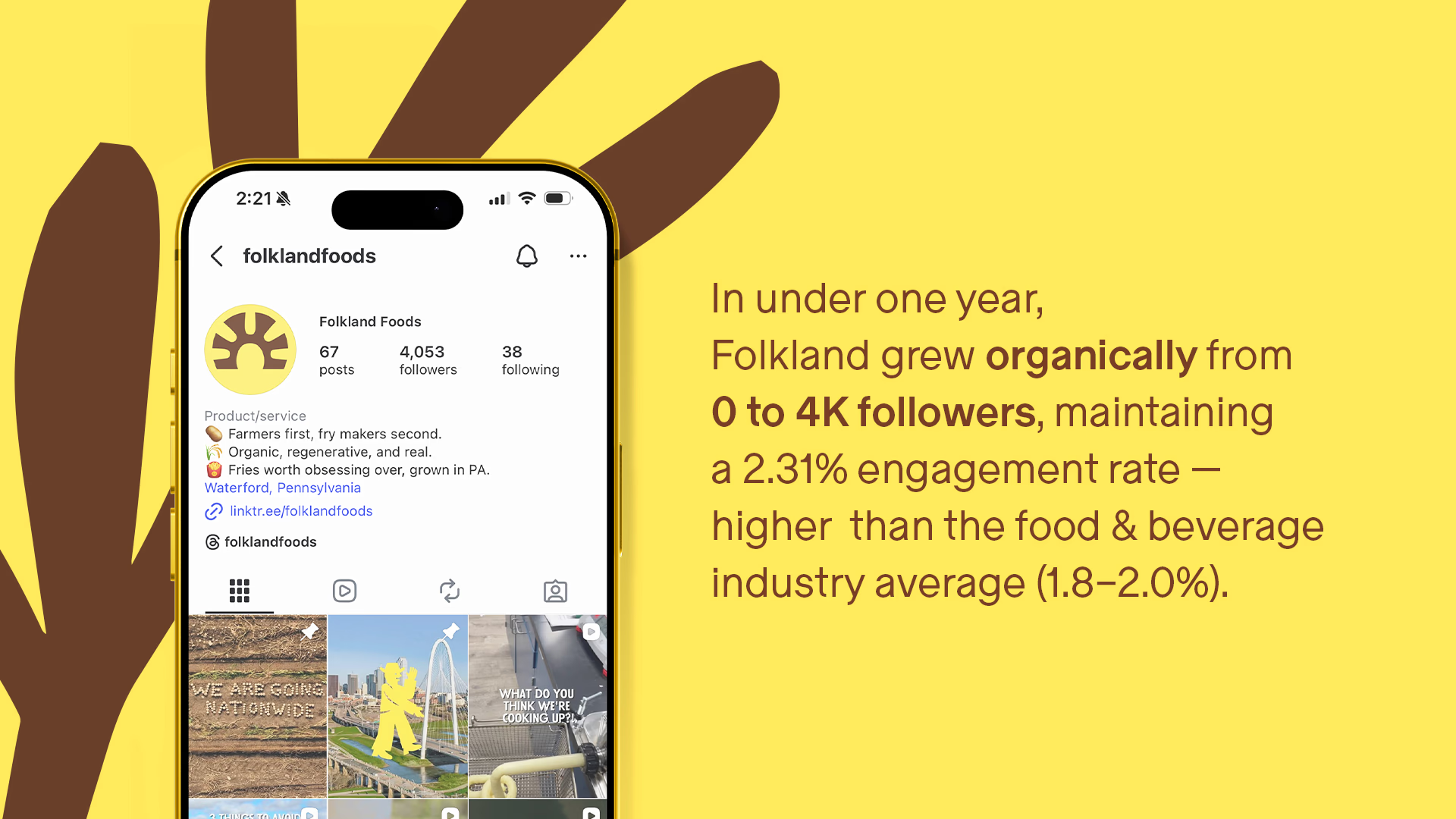
The delivery loop is what turns a proposal into results. Every serious provider runs some version of the same three-phase workflow: onboard, plan, publish. If a provider cannot describe theirs in five sentences, they do not have one. For context on how brand promotion strategy links to consistent execution, the workflow underneath matters as much as the ideas on top.
Onboarding and Brand Discovery
Onboarding collects the raw material: brand assets, tone guidelines, target audience, product SKUs, and platform credentials. Most providers use a structured intake form so nothing gets missed. This is also the moment to hand over any existing style guides or packaging and brand identity documentation so the content team draws from one source of truth.
Content Calendar Review and Approval
Content calendars are typically built one to two weeks ahead. You get a review window, request revisions, and approve before anything goes live. According to Feedbird’s published workflow, full deliverables land in about a week after brief submission, with client approval as the gate. That approval step is non-negotiable for regulated categories, especially CPG brands managing claim compliance.
Publishing and Performance Tracking
Publishing runs on schedule. Reporting closes the loop with click-through rates, impressions, follower growth, and engagement rate per post. Good agencies translate those numbers into next-cycle decisions instead of dumping a dashboard. Iterative optimization is what separates a service from a printing press, a distinction that runs through smart social marketing strategies for CPG brands.
Takeaway: the delivery loop should have an approval gate and a monthly learnings step, in writing.
Pricing Models and What They Cover

Pricing is where the industry gets murky. Rates range from lean subscriptions to senior-led retainers, and the deliverables shift accordingly. Founders comparing quotes should map every line item to a specific output, which is the mindset behind cost-effective marketing strategies for consumer brands.
Subscription and Retainer Pricing
Entry-level social media management subscriptions start around $99 per month for a small set of posts, per Feedbird’s public pricing. That tier typically covers static posts on one platform. Add short-form video and you are looking at $149 per month or more. Meta Ads management often sits at $499 per month. This subscription model works well for emerging food and beverage brands watching burn.
À La Carte and Custom-Scoped Packages
Custom scoping lets you pay only for what you need. Content creation only. Community management only. Strategy plus reporting, with your in-house team executing. Premium managed tiers with senior strategist oversight typically start around $1,500 per month and climb from there. Flat-rate pricing is increasingly a differentiator because it kills the billable-hour ambiguity that plagues legacy agencies, a shift also visible in how brands run modern AI-assisted social marketing.
| Tier | Typical Range | What’s Included |
|---|---|---|
| Entry subscription | $99–$299/mo | 8–12 static posts, 1 platform, basic reporting |
| Mid subscription | $500–$1,200/mo | Posts plus short-form video, 2–3 platforms, community management |
| Senior-led retainer | $1,500–$5,000+/mo | Strategy oversight, production, ads coordination, monthly review |
| Ads add-on | $1,000 – $5,000/mo | Meta, Google, or TikTok ad management on top of organic |
Takeaway: anchor every quote to specific deliverables per platform, not vague “management” language.
Key Benefits of Outsourcing Social Media and Content Creation
Outsourcing is not a shortcut. It is a specialization play. Founders who try to run social in-house tend to underprice their own time, a trap covered in the brand builder versus product pusher framework.
Consistency and Time Savings
Consistent posting is one of the highest-use activities for organic reach. Sporadic posting underperforms scheduled content across every major platform. A managed service transfers planning, production, and publishing to a team that lives in the calendar, which reclaims the five to ten hours a week most founders spend on social tasks. Those hours belong on product, distribution, or restaurant website optimization instead.
Access to Specialist Creative Skills
Agency teams bring platform-specific expertise: algorithm behavior, trending audio, caption structures that convert, hook patterns that stop the scroll. A team serving hundreds of brands develops pattern recognition you cannot buy at a single in-house hire. That cross-industry read is why we invest heavily in creative packaging and visual systems that translate on and off feed.
Measurable Business Impact
Third-party reporting is honest by default. In-house teams grade their own homework. A provider with a monthly reporting cadence is contractually obligated to show the numbers, good or bad, and to explain what changes next. That objectivity is especially useful for TikTok Shop rollouts in CPG, where the data moves fast.
Takeaway: outsourcing buys consistency, specialist skill, and honest reporting, in that order.
How to Evaluate a Social Media Management and Content Creation Provider

Choosing a provider is a positioning question, not a price question. The right partner should already understand your category, or have a clear plan to learn it fast. Start with the portfolio, then interrogate the workflow, a process similar to how founders review pitch decks for consumer brands.
Portfolio and Industry Fit
Review the portfolio by vertical, not just by format. A team that has produced beautiful SaaS carousels may not know how to shoot food. Ask for examples from your category and look at the actual accounts, not the case study PDFs. This is especially true for hospitality, where visual grammar is unforgiving, as we cover in restaurant opening playbooks.
Workflow Transparency and Approval Process
Approval workflows should give you final sign-off before anything is published. Providers who publish without client review create brand risk. Ask to see the tool, the calendar template, and the revision policy. Transparent workflow is the mark of a team that has run this at scale, not one figuring it out on your account, a principle also true of multicultural marketing programs.
Reporting and Contract Flexibility
Month-to-month or cancel-anytime contracts reduce commitment risk, especially on a first engagement. Reporting cadence should be defined upfront so both parties agree on what success looks like. Agencies managing 200-plus active clients often have deeper format-specific expertise than a generalist freelancer, per Feedbird’s public case volume, and that scale shows up in categories like food and beverage social.
Takeaway: demand portfolio proof, an approval gate, and short contract terms before you sign.
Common Misconceptions About Social Media Management Services
The category is loud, so myths persist. Three come up in almost every founder call, and each one costs money when believed, a pattern we also see in common packaging design mistakes.
Misconception: Outsourcing Means Losing Your Brand Voice
Experienced managers build brand voice guides during onboarding and produce content that sounds like the brand, not the agency. Voice is a document, then a discipline. Good teams write it down and hold their own writers to it, the same way CPG branding strategy enforces consistency across packaging, web, and retail.
Misconception: More Posts Always Means Better Results
Platform algorithms reward engagement quality and consistency over raw volume. An optimized five-post-per-week schedule can outperform daily posting with weak engagement. The math is simple: fewer, better posts train the algorithm to distribute you, a dynamic worth understanding before hiring, and something we discuss in brand transformation strategy.
Misconception: Social Media Management Is Just Posting
Full-service management includes strategy, community engagement, paid amplification coordination, and reporting. AI-generated content is common among budget providers; human creative teams producing reviewed, original work remain the higher-quality option. Organic results also compound over three to six months, not overnight, closer to the arc of brand identity work than a paid ads sprint.
Takeaway: buy on voice discipline, quality-per-post, and a realistic timeline, not on volume promises.
Frequently Asked Questions
What is the difference between social media management and content creation?
Content creation produces the assets: graphics, copy, video. Social media management runs the system around them: strategy, scheduling, community management, and reporting. Full-service providers do both, and most brands need the combination to see compounding results.
How much do social media management and content creation services cost?
Entry-level subscriptions start around $99 per month for a small set of posts, per Feedbird. Mid-tier retainers run $500 to $1,200 monthly. Senior-led managed plans typically start at $1,500 per month and scale with platforms, video volume, and paid amplification.
What platforms do social media management agencies typically cover?
Most agencies cover Instagram, Facebook, TikTok, LinkedIn, Pinterest, YouTube, X, and Google Business Profile. Coverage per plan varies, so confirm which platforms are included and which require an add-on before signing. Video-first platforms usually cost more due to production time.
Should I outsource social media management or hire in-house?
Outsource if you are spending more than a few hours a week on social and still not hitting goals. Hire in-house once you need daily creative direction, own-brand video volume, or tightly integrated campaign work. Many brands run a hybrid model successfully.
How long does it take to see results from a social media management service?
Organic results compound over three to six months. Expect early wins in consistency and content quality within the first cycle, follower and engagement improvements by month three, and meaningful business impact, like leads or sales, by month six with sustained investment.
What should be included in a social media management package?
At minimum: strategy, content production, scheduling, community management, and monthly reporting. Better packages add paid ads coordination, quarterly strategy reviews, and creative direction for user-generated content. Confirm platform coverage, post counts, and revision rounds in writing before you sign.
How do agencies maintain my brand voice when creating content?
Through structured onboarding: a written voice guide, sample content, competitor references, and approval loops. The good ones assign a dedicated writer or strategist to your account so voice stays consistent. Ask for a voice document deliverable in month one.
Can social media management services help with paid ads as well as organic content?
Yes, most full-service providers offer Meta, Google, and TikTok ads as add-ons, typically $149 to $499 per month or a percentage of ad spend. Coordinating paid and organic under one team usually improves creative consistency and reporting clarity.
Conclusion
Social media management and content creation services work when you buy them like infrastructure, not decoration. Get the strategy in writing. Insist on an approval gate. Demand honest reporting. Then let a specialist team run the calendar so you can run the business. If you want a partner that treats social as a brand-building lever rather than a content mill, reach out to the studio and we will scope it to what you actually need. You can also browse past client work to see how the team at MAVRK Studio approaches social for hospitality and consumer brands.