

Label design services cover everything from first-round concept work to print-ready files, with costs shaped by project complexity, revision rounds, and whether you want specialty finishes. Prices typically start around $45 for basic freelance work and climb past $600 for full-service studio projects. MAVRK Studio builds labels with clear deliverables and clean pre-press, so founders can budget a launch or rebrand without guessing what “design fee” actually means.
What Label Design Services Typically Cost
Label pricing splits into three buckets: freelance, crowdsourced, and studio. Each has its own math, and each attracts a different kind of buyer. Before you pick a lane, know what a base fee actually covers, and what gets added at checkout. If you are still shaping the brand around the label, our take on why product label design matters is a useful primer on where design fees earn their keep.
Freelance and Crowdsourced Pricing
Freelance graphic designers running straightforward label layout tend to sit around $45 per hour, scaling with complexity. Crowdsourced platforms like DesignCrowd publish real project totals in the $90 to $580 range, depending on scope and how many designers competed. That variance is not random; it tracks brief quality and the number of SKUs, which is a pattern we see in beverage packaging design ideas too.
Agency and Full-Service Studio Pricing
Full-service studios price on scope, not hours. A single label with strategy, art direction, and pre-press typically starts north of $500 and can pass $2,000 for premium categories. You pay more, but the file arrives print-ready and on-brand. Studios that also handle identity work, like a brand identity agency, roll label design into a broader system so the shelf and the site match.
Add-On Fees to Budget For
The base fee is rarely the whole fee. Watch for these line items:
- Specialty finishes. Clash Graphics charges $125 for a foil or spot UV mask layer.
- File release. Clash Graphics adds $100 to send print-ready files to the client.
- Extra revisions. After the included rounds, edits run $45 per half hour or $15 for small tweaks.
- Rush timelines. Same-week turnarounds typically carry a 25 to 50 percent surcharge.
Takeaway: quote the base plus at least two add-ons when you budget. A $150 label rarely ships for $150. For deeper context on where design sits inside a launch, see how a product launch agency can drive a successful launch.
What Affects the Price of a Label Design
Two labels of identical trim size can price 4x apart. The variables below are why.
Product Category and Regulatory Requirements
Food, supplement, and chemical labels have to hit FDA, TTB, FTC, or GHS rules depending on category. That is design time, not just legal review, because mandatory panels reshape the composition. Decorative categories skip most of this, which is one reason a candle label costs less than a supplement label. Founders new to CPG should read how to build a beverage brand before signing off on a label brief.
Label Size, Shape, and Material
Die-cut shapes and non-standard trims need dieline setup, and dielines are billable pre-press work. Uncoated stocks, textured papers, and clear films each carry their own ink and color considerations. If the label has to match a cap color or an outer carton, factor in color-matching hours. This is where a solid logo for food and beverage makes downstream label work faster and cheaper.
Number of Revisions and Rounds
Most entry-level services cap included revisions at one or two rounds. Anything after that bills hourly or per-change. Multi-SKU projects (a four-variant beverage line, say) also price higher than a single label, because each SKU needs its own color story and copy pass. A tight brief cuts revision spend more than any discount ever will. Ten strategies to build brand awareness covers the upstream brand decisions that shrink the revision cycle.
The Label Design Process: Step by Step
Good label pricing tracks a real process. If a provider cannot walk you through the steps below, treat the low quote as a warning, not a win.
Discovery and Creative Brief
Every serious provider starts with a creative brief or design questionnaire. Clash Graphics explicitly requires one before work begins, and studios use it to lock category, audience, tone, and mandatory copy. Skip the brief and you buy revision rounds instead. If you have never written one, borrow the framing from the art of designing a brand logo, which uses the same discovery muscle.
Design Development and Revisions
Concepts land, you react, art direction sharpens. Two rounds is standard at the entry level. Studios typically show two or three directions, then converge on one and refine. Color, typography, hierarchy, and mandatory panels all get resolved here. If the label sits inside a bigger identity, cross-check the design against your social media branding for CPG brands so the shelf and the feed do not fight.
Pre-Press and Print Handoff
Pre-press is where amateur files die. A studio runs a spec check on bleed, resolution, color mode, and dieline before release. Files arrive as AI, PDF, or EPS, and per Resource Label Group’s process notes, materials, adhesives, and printing methods are confirmed against the final art. Some providers charge a file release fee for the print-ready package; make sure that line item is in your quote. For hospitality clients pairing label work with other assets, our hospitality digital marketing strategies cover the wider handoff.
Label Design Cost by Industry and Use Case
Category shapes budget more than any other single variable. Here is the rough shape of it.
| Category | Typical range | Cost drivers |
|---|---|---|
| Food & beverage | $250 to $1,500+ | Nutrition panels, allergens, FDA/TTB rules |
| Personal care & cosmetics | $300 to $2,000 | Spot UV, foil, premium visual polish |
| Industrial & chemical | $150 to $500 | GHS symbols, legibility over decoration |
| Craft beer, wine, spirits | $400 to $2,000+ | Shelf presence, illustration, series work |
| Health supplements | $300 to $1,200 | FDA/FTC claim rules, disclaimer copy |
Food and beverage projects usually absorb the most design hours because of mandatory panels. Personal care leans premium and often adds finishes. Industrial labels stay closer to entry-level pricing since decoration is secondary. Craft beverage sits at the top, matching what DesignCrowd project totals near $580 suggest for competitive shelf categories. For beverage founders, our top marketing strategy for the beverage industry contextualizes that spend against downstream sell-through.
DIY vs. Professional Label Design: Cost Comparison
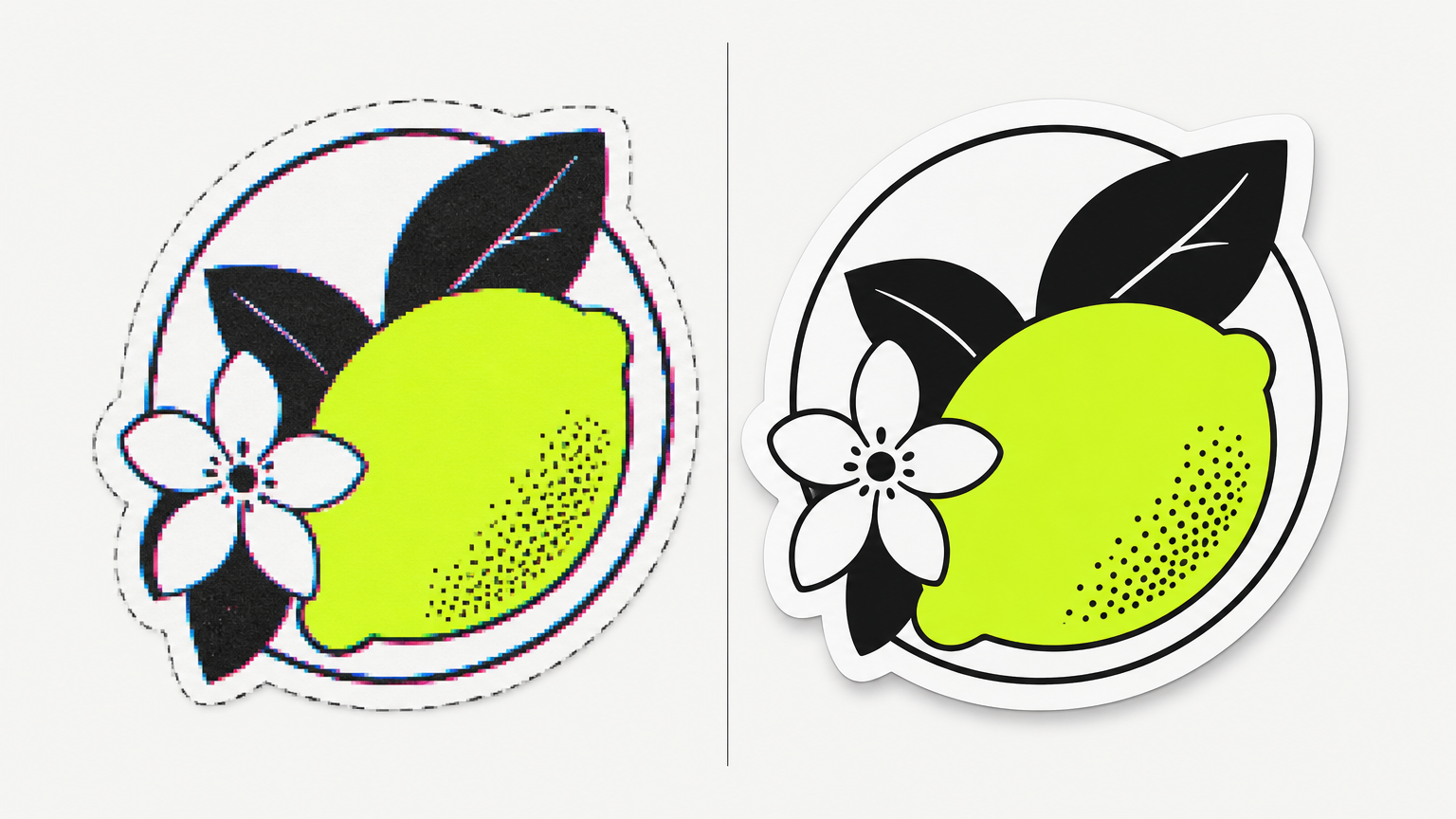
Free tools like Adobe Express produce a label. They do not always produce a printable one. That gap is where the real cost comparison lives.
| Path | Upfront cost | Hidden costs | Best for |
|---|---|---|---|
| DIY templates | $0 to $20/mo | File corrections, reprints, brand drift | Prototypes, one-off events |
| Crowdsourced | $90 to $580 | Brief quality risk, IP handling | Single-SKU launches |
| Freelance | $150 to $800 | Pre-press gaps, availability | Mid-scope projects |
| Studio | $500 to $3,000+ | Higher base, longer timeline | Multi-SKU, brand systems |
DIY tools skip design fees but rarely output true print-ready files, which raises print rejection rates and file-correction charges. Professional services fold in spec checks and pre-press review, which is what actually protects the print budget. For multi-SKU brands with real guidelines, studio work usually beats DIY on lifetime cost, and it plays nicely with a proper ecommerce branding agency engagement when the label has to flex across DTC and retail.
Red Flags: When a Low Price Is Too Good To Be True
A $30 label design is usually not a deal. It is a template with a stock illustration on top. Watch for these signals.
- No creative brief requested. No brief means no brand alignment. You will pay the difference in revisions.
- No pre-press services. No bleed, no color profile, no dieline. Print vendors reject the file or bill correction fees.
- Unclear file ownership. If the contract does not spell out who owns the final AI/PDF, assume you do not.
- No revision policy. “Unlimited revisions” often means “unlimited debate, then abandonment.”
- Vague deliverables. Legitimate providers state file formats, revision counts, and whether print release costs extra.
The cheapest quote plus a rejected print run almost always beats the studio quote in total cost. If you are choosing between providers, our take on restaurant marketing agencies and why partner with one applies the same vetting logic to hospitality partners.
Frequently Asked Questions
How much does label design cost?
Label design typically runs $45 to $600 for single-label projects, with studio work reaching $2,000+ for premium categories. Freelance rates hover near $45 per hour, and crowdsourced projects usually land between $90 and $580.
What is included in a label design service?
Standard scope covers a creative brief, one or two design directions, one to two revision rounds, and final files in AI, PDF, or EPS. Pre-press, specialty finishes, and file release are often billed separately.
How long does label design take?
Most single-label projects take two to four weeks from brief to print-ready file. Crowdsourced projects can produce initial concepts within hours, while multi-SKU studio engagements often run six to eight weeks including revisions and pre-press.
Do label designers provide print-ready files?
Reputable services do, though some charge a separate file release fee. Clash Graphics, for example, adds $100 for the print-ready package. Always confirm bleed, resolution, and color profile handling before signing the quote.
What file format do I need for label printing?
Most commercial printers want vector PDF or AI with 300 dpi raster elements, CMYK color, 0.125-inch bleed, and outlined fonts. EPS is common for legacy workflows. Confirm the exact spec with your print vendor before final export.
Can I make changes after the label design is approved?
Yes, but changes after approval are billed outside the original scope. Expect $15 for small copy tweaks and roughly $45 per half hour for anything requiring layout work. Batch changes to avoid stacked fees.
What is the difference between label design and packaging design?
Label design focuses on the applied label itself, including copy, art, and dieline. Packaging design covers the whole vessel, including cap color, carton, and structural elements, and typically costs two to five times more than a single label.
How do I brief a label designer effectively?
Provide brand guidelines, mandatory copy, target customer, competitor references, print specs, and quantity of SKUs. A tight brief cuts revisions dramatically, which is where most budget overruns come from. Include dieline files if you already have them.
Bringing It Together
Label design pricing is not a mystery, it is a stack of decisions: freelance versus studio, single SKU versus system, template versus custom, DIY versus print-ready. Match the tier to the stakes. A one-off event label does not need a studio; a national launch does not survive a template. When the label has to carry a brand, sell on shelf, and pass a printer’s pre-press check, working with MAVRK Studio keeps the deliverables, the finishes, and the file specs clear from day one.