


An AI visibility audit measures how often and how accurately a brand appears in AI-generated answers from platforms like ChatGPT, Gemini, Perplexity, and Google AI Overviews. As conversational search reshapes product discovery, brands that rank well on traditional search can still be invisible to AI engines. MAVRK Studio helps hospitality and consumer founders understand and improve their standing in this new discovery layer before competitors claim the conversation.
What Is an AI Visibility Audit
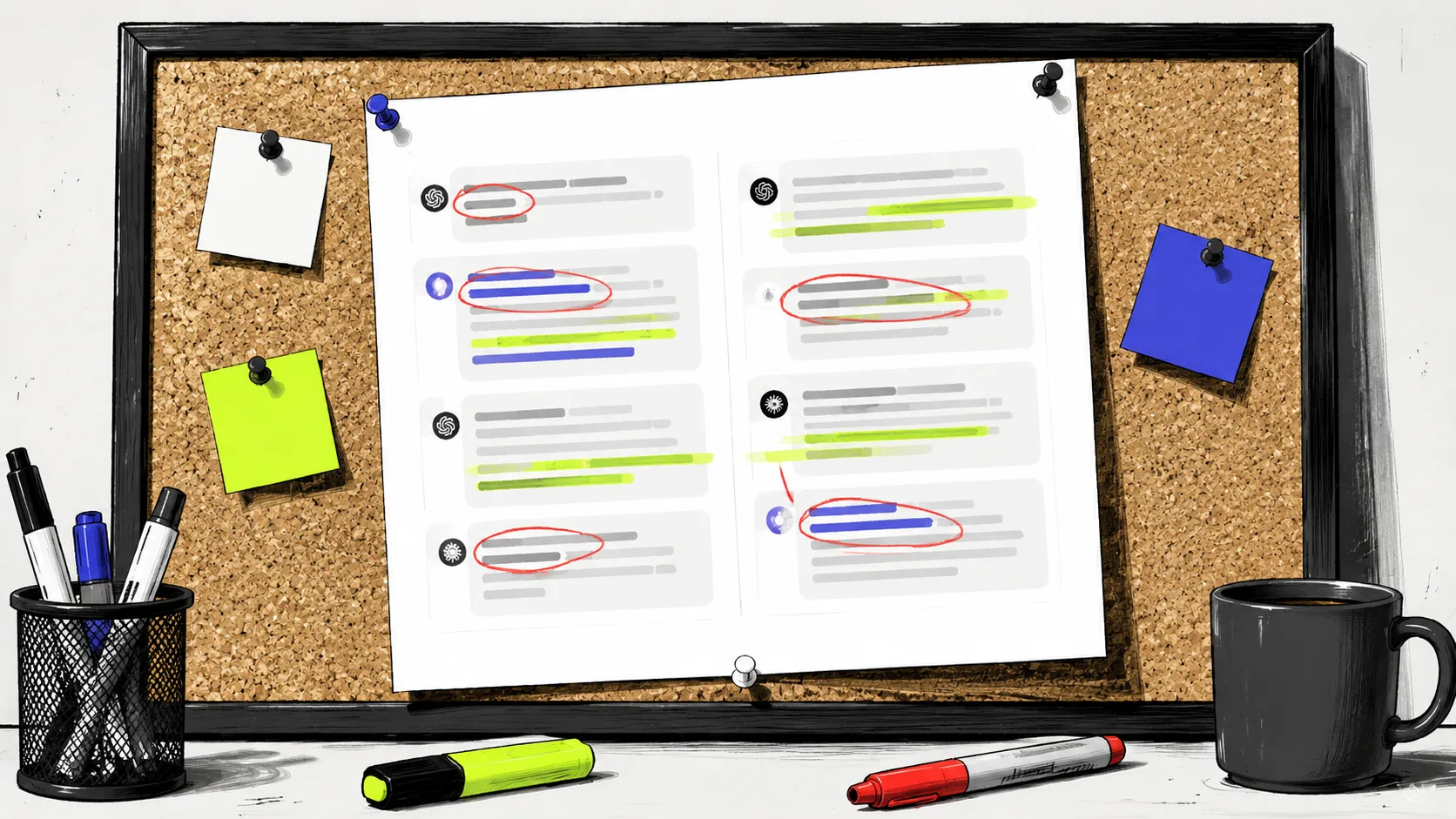
An AI visibility audit is a structured analysis of how a brand appears, is cited, and is described across AI-driven surfaces. It covers large language models like ChatGPT and Claude, AI-native search like Perplexity, and AI features layered onto legacy search like Google AI Overviews and Bing Copilot. The output is a scorecard, not a vibe check. Think of it as the same discipline you would apply to a CPG branding strategy audit, aimed at a channel most brand teams still ignore.
Precise Definition
The audit measures four things: whether the brand appears at all in AI responses, whether those responses cite the brand’s own site, how accurately the brand is described, and which competitors surface alongside it. According to Yotpo’s research on AI visibility, only 16.7% of sources cited in Google AI Overviews overlap with the first page of organic search results. Traditional rankings and AI mentions live in different worlds, which is exactly the gap most brand transformation strategies fail to address.
How It Differs from a Traditional SEO Audit
An SEO audit grades rankings and keyword positions. An AI visibility audit grades brand mentions, citation frequency, sentiment accuracy, and share of voice across generative platforms. The signals differ too: AI engines weight structured product data, authentic reviews, and off-site citations more heavily than backlinks and header tags. The takeaway for founders thinking about brand versus marketing strategy: rankings tell you who found your page, AI visibility tells you who was told your name.
Why AI Visibility Matters for Brands Today

AI-generated answers are not a niche channel anymore. Yotpo reports that Google AI Overviews now appear on roughly 48% of tracked search queries, which means nearly half of all searches start with a synthesized answer instead of a list of links. For consumer and hospitality brands built on brand identity, that shift changes what discovery even means.
The AI Visibility Gap
When a brand is absent from a synthesized AI answer, it is not ranked lower. It is removed from the consideration set entirely. There is no page two on ChatGPT. There is no “see more” on Perplexity. If the model does not mention you, you do not exist for that shopper. That silence is louder than any ranking drop, and it affects everything from food and beverage social media referral traffic to direct branded search.
Commercial Risk of Being Absent
Traffic from generative AI engines to retail sites is already growing, and consumer habits are shifting fast toward AI-assisted purchase decisions. Shoppers use AI to narrow choices before they ever type your URL. AI engines weight structured data, authentic reviews, and off-site citations differently than keyword-based ranking signals, which forces a different optimization approach. Brands stacking cost-effective marketing strategies can no longer skip this surface, because being absent costs more than being ranked tenth.
How an AI Visibility Audit Works

A proper audit follows three stages: prompts, runs, and scoring. Manual work handles the first benchmark. Automation handles the ongoing cadence. Every step should feel closer to research than to guesswork, similar in rigor to how creativity in CPG marketing gets stress-tested before launch.
Stage 1: Building Your Prompt Set
Prompt quality determines audit quality. Pull prompts from customer support tickets, sales calls, community forums, and Reddit threads, not from broad category terms. As Jason Patel, CEO of Open Forge AI, told PartnerStack, “If you have the wrong prompts, you’ll have the wrong audit.” Aim for 10 to 20 high-intent prompts covering awareness, comparison, and recommendation queries. If your category involves specific use cases, mirror the specificity, the same way a restaurant opening playbook mirrors real operator questions.
Stage 2: Running Prompts and Documenting Responses
Run the same prompt set across ChatGPT, Gemini, Perplexity, and Bing Copilot. Each platform cites different sources and frames brands differently, so testing one is like sampling one flavor and calling the ice cream shop reviewed. Document each response verbatim. Note the citations, the competitors named, and the tone. AI responses shift day to day, so timestamp everything. This is the same discipline behind brand promotion stories, where the same message lands differently by channel.
Stage 3: Scoring and Mapping Citations
Build a scorecard with columns for brand presence, sentiment, information accuracy, competitors mentioned, and pages cited per platform per prompt. Citation mapping identifies which specific pages or third-party sources AI engines pull from, which reveals content gaps and authority deficits. Repeat the whole cycle monthly, because AI models update on irregular schedules. Founders coming from a brand builder mindset will recognize the pattern: measure, adjust, measure again.
Key Metrics an AI Visibility Audit Reveals
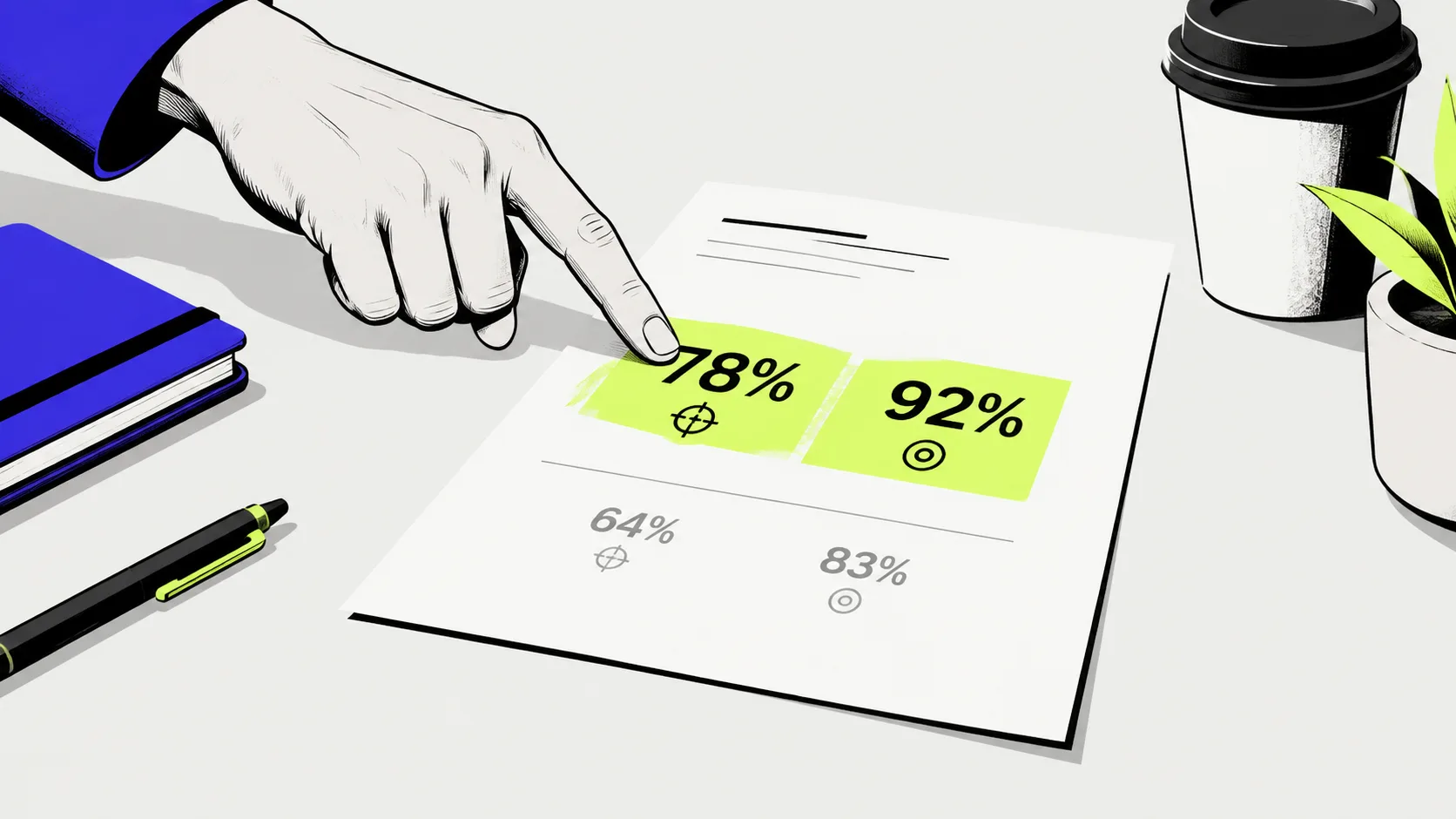
A useful audit surfaces numbers you can actually act on, not vanity metrics. The strongest signals sit at the intersection of frequency, accuracy, and framing. Brand teams already tracking social marketing outcomes for CPG will find the metric logic familiar, just with different inputs.
Brand Mention Rate and Share of Voice
Brand mention rate is how often your brand appears across the defined prompt set. Share of voice compares that frequency against named competitors on the same prompts. If you show up on three of twenty prompts and your closest rival shows up on fourteen, you have a share-of-voice problem that no amount of CPG advertising spend will solve without a citation strategy behind it.
Citation Accuracy and Answer Integrity
Citations matter more than mentions alone because citations drive users back to your site, according to Jason Patel at Open Forge AI. Answer integrity is a separate metric: whether platforms describe your pricing, positioning, and product features correctly. Sentiment scoring across platforms reveals how AI engines characterize your credibility. Competitor benchmarking within the same audit surfaces which rivals consistently appear where you do not, which is the kind of intel that reshapes social media strategy for CPG brands.
Common Misconceptions About AI Visibility Audits
Founders bring assumptions from the SEO era into the AI era, and most of them break on contact with data. Three misconceptions come up constantly.
Misconception: High Google Rankings Mean AI Visibility / Reality: They Are Separate
A brand can hold position one in Google organic results and still be completely absent from ChatGPT or Perplexity responses. The signals AI engines weight, including structured data, third-party citations, and topical clustering, differ from classic ranking factors. Treat AI visibility the way you treat packaging and brand identity: a separate discipline that supports the whole, not a byproduct of something else.
Misconception: One Audit Is Enough / Reality: AI Models Update Continuously
AI models are retrained on irregular schedules, meaning your visibility score can change without any action on your part. A single audit gives you a snapshot; ongoing monitoring gives you a baseline. Brands running seasonal campaigns already understand this rhythm from tracking F&B social media performance week over week.
Misconception: Only Large Brands Get Cited / Reality: Citation Depends on Content Structure
AI engines favor structured, authoritative, and consistently cited content regardless of brand size. Smaller brands with strong topical authority and third-party citations can outrank larger competitors on specific prompts. Multicultural and niche brands often win here because they own tighter topical clusters, a dynamic covered in our notes on multicultural marketing and branding.
How to Get Started with an AI Visibility Audit
You do not need a platform license to start. You need a spreadsheet, a list of real questions, and a couple of hours. The goal of the first pass is a benchmark, similar to how a founder building a pitch deck for a consumer brand starts with a rough draft before hiring a designer.
Step 1: Define Your Prompt Set
Write 10 to 20 prompts pulled from real customer language. Cover awareness (“best hot sauce for tacos”), comparison (“Brand A versus Brand B”), and recommendation (“what should I buy as a gift for a home cook”). Keep prompts direct and neutral to reduce confirmation bias. Founders in food and beverage can borrow prompt ideas from Fancy Food Show trend notes and community threads to seed real queries.
Step 2: Choose Your Platforms and Run the Audit
Run every prompt on ChatGPT, Gemini, and Perplexity at minimum. Add Bing Copilot if your category has strong Microsoft ecosystem presence. Document brand presence, sentiment, cited pages, and competitors named. Keep the format identical across platforms so the scorecard compares like to like. If you already use AI in food industry workflows, the tooling instinct will feel familiar.
Step 3: Act on Findings and Set a Re-Audit Cadence
Priority fixes fall into three buckets: content gaps (topics AI engines expect you to cover), citation gaps (trusted third-party sources that do not mention your brand), and structured data gaps (schema, entity clarity, author credentials). Re-audit monthly. Automated tools scale the work once you outgrow spreadsheets. When you are ready to hand this off, our team is available to talk through scope and cadence.
Frequently Asked Questions
What is an AI visibility audit and what does it measure?
An AI visibility audit measures how a brand appears, is cited, and is described across AI-generated answers on platforms like ChatGPT, Gemini, and Perplexity. It tracks mention rate, citation frequency, sentiment, answer accuracy, and share of voice against named competitors.
How is an AI visibility audit different from an SEO audit?
An SEO audit grades keyword rankings and technical health. An AI visibility audit grades brand mentions, citations, sentiment, and share of voice across generative platforms. The signals differ, so a strong SEO score does not guarantee AI visibility, and vice versa.
Which AI platforms should I test my brand visibility on?
Test on ChatGPT, Gemini, and Perplexity at minimum, and add Bing Copilot for broader coverage. Each platform cites different sources and frames brands differently, so running prompts on only one produces an incomplete and often misleading visibility picture.
How often should I run an AI visibility audit?
Monthly at minimum. AI models are retrained on irregular schedules, competitor activity shifts constantly, and citation sources change. A quarterly cadence misses too many swings, and an annual audit is essentially a historical document by the time it is finished.
Why does my brand rank on Google but not appear in ChatGPT answers?
AI engines weight signals differently than Google organic. Structured data, third-party citations, authentic reviews, and topical authority matter more than backlinks or exact-match keywords. Yotpo research found only 16.7% of AI Overview citations overlap with page-one organic results.
What fixes improve a brand’s AI visibility after an audit?
Fixes fall into three buckets: content gaps (missing topical coverage), citation gaps (thin third-party mentions on trusted sites), and structured data gaps (schema, entity clarity, author credentials). Prioritize the bucket with the largest visibility deficit revealed by your scorecard.
Can small brands appear in AI-generated answers, or is it only for large companies?
Small brands appear frequently when they own tight topical clusters and earn consistent third-party citations. AI engines favor authority and structure over brand size. A niche brand with strong topical authority can outrank a larger competitor on specific commercial-intent prompts.
How long does an AI visibility audit take to complete?
A manual first-pass audit takes two to four hours for 10 to 20 prompts across three platforms. Scoring and citation mapping adds another two hours. Ongoing monthly re-audits shorten to under an hour once your scorecard template is set.
Where This Leaves Founders
Discovery has moved. The brands that treat AI visibility as a core layer of their positioning, not a side project, are the ones that will own the next few years of consumer conversation. Start with a small prompt set, run it honestly, and act on what the scorecard says. When you want a partner who thinks about identity, legacy, and this new discovery layer together, MAVRK Studio’s work with hospitality and consumer brands is a good place to see the approach in practice.