



A paid social media agency plans, launches, and optimizes advertising campaigns across Meta, TikTok, LinkedIn, and Pinterest on behalf of brands. The job is to convert budget into new customers, not impressions. For hospitality and consumer founders weighing whether to hire one, the real question is how these teams operate, what they cost, and what outcomes to demand. MAVRK Studio works with founders on exactly that decision, so this guide is the field manual we wish more brands had before signing.
Definition: What a Paid Social Media Agency Actually Does

A paid social media agency runs the full lifecycle of paid ads on social platforms. That covers audience research, creative production, campaign setup, pixel and tracking configuration, A/B testing, and reporting. It is distinct from organic social management, where the deliverable is content calendars and community engagement rather than media spend. Most agencies coordinate across Meta, TikTok, LinkedIn, Pinterest, and Snapchat depending on where a brand’s audience actually shows up, which is why a strong social media strategy for CPG brands starts with platform selection before creative.
Core service responsibilities
The core deliverables are consistent across agencies: audit the existing ad account, define audience segments, produce ad copy and creative variations, configure tracking, launch, then optimize weekly. Reporting closes the loop back to revenue. For consumer brands, creative volume matters more than clever targeting, which is why creativity in marketing for CPG brands is treated as a performance lever, not a decoration.
How paid social differs from organic social management
Organic social builds a following and community over time; paid social buys attention against a defined audience today. Paid social also differs from paid search: search ads intercept demand that already exists, while social ads interrupt a feed based on audience signals. Both can work, but the difference between brand and marketing strategy shapes which mix a founder actually needs.
Takeaway: if the ask involves ad budget, tracking, and revenue attribution, you want paid social. If the ask is content and community, that is a different scope.
How a Paid Social Agency Operates: The Process

Most engagements follow a predictable arc: audit, strategy, launch, optimize. The best agencies front-load discovery before spending a dollar. Weaker ones skip straight to boosting posts and call it a program. Founders should ask exactly which phase they are being sold, because the cost-effective marketing strategies for brands that actually compound live in the audit and testing phases, not the launch.
Discovery and audit phase
A pre-contract audit covers ad account history, competitive landscape, audience segmentation opportunities, and the customer journey. For consumer brands, this is also where packaging, PDP, and post-click experience get reviewed, because bad landing pages sink good ads. Our own CPG advertising playbook treats the audit as the first deliverable, not a sales gimmick.
Strategy and creative development
Strategy maps audience segments, platform mix, budget allocation, and creative formats. In 2026, creative is where performance is won or lost. Platforms like Meta and TikTok have flattened targeting differences between advertisers, so disciplined creative variation is where gains are found, according to Sweat Pants Agency’s paid social breakdown. Leading teams run 15 to 20 creative variations per month so learnings compound across iterations, and that cadence maps directly to how brands should think about social marketing for CPG brands more broadly.
Launch, testing, and optimization
After launch, the work is triage and iteration. Weekly performance reviews, biweekly creative refreshes, monthly reporting. Mature agencies tie spend to new-customer cost of acquisition (NC-CAC) and blended marketing efficiency ratio (MER) rather than platform-reported vanity numbers. Founders evaluating this cadence should read Facebook social media marketing with AI for a sense of how automation is changing the optimization loop.
Takeaway: the process is only as strong as the audit and the creative testing velocity behind it.
Platforms and Specializations
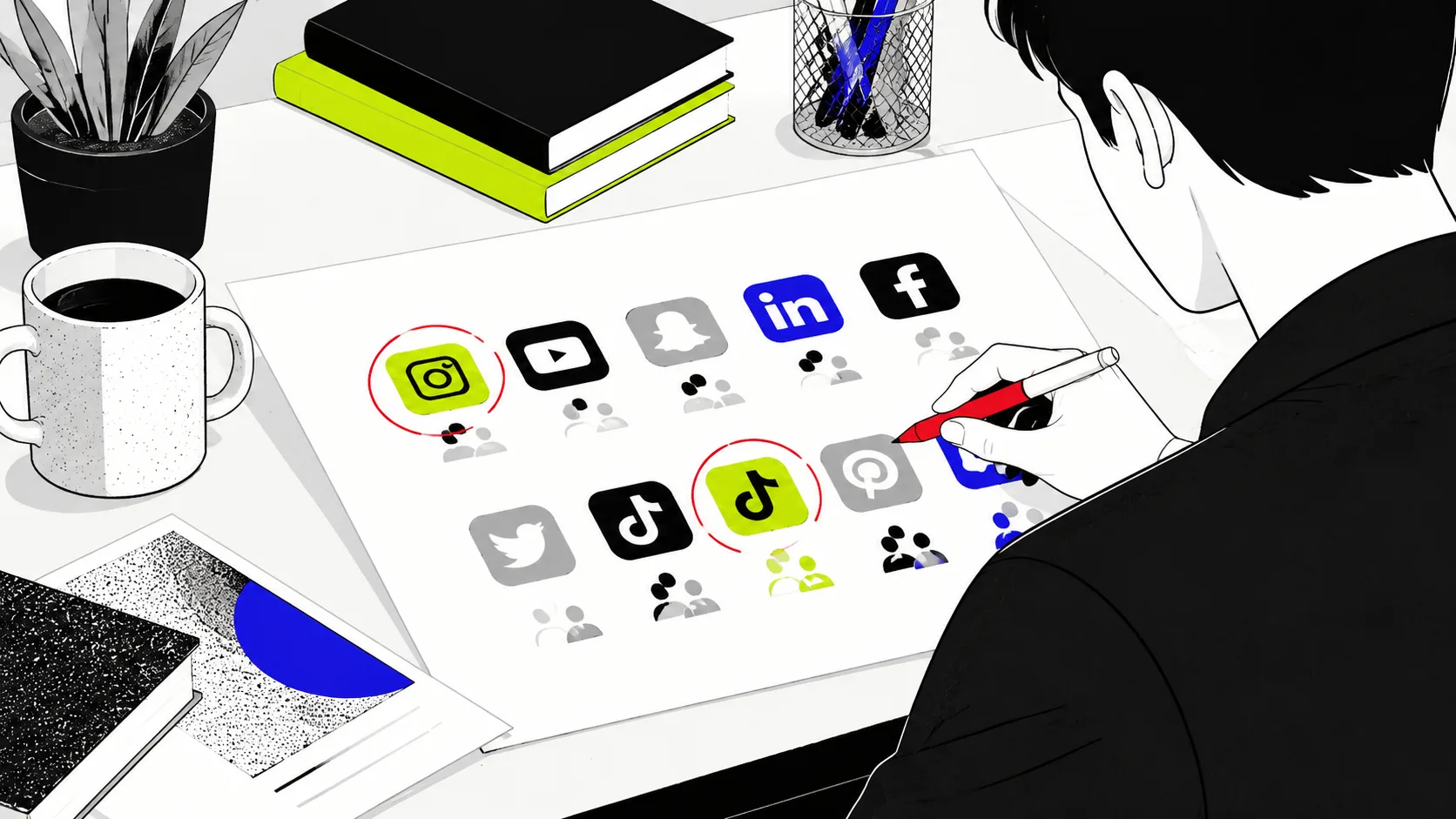
Not every platform matters for every brand. A good agency will actively talk you out of a channel that does not fit. That discipline separates strategists from order-takers, and it is why hospitality and consumer teams benefit from working with specialists who understand food and beverage brands on social media rather than generalists who treat every account the same.
Major platforms managed by paid social agencies
- Meta (Facebook and Instagram): still the default for consumer brands thanks to audience depth and mature attribution.
- TikTok: now a primary channel for DTC brands targeting younger buyers, with creative formats managed separately from Meta.
- LinkedIn: the main channel for B2B lead generation, targeted by job title, company size, and industry.
- Pinterest and Snapchat: secondary channels that niche agencies include for lifestyle, home goods, or Gen Z fits.
The TikTok Shop opportunity for CPG brands has also reshaped how food, beverage, and beauty founders budget between Meta and TikTok in the same quarter.
Vertical and audience specializations
Some agencies specialize by vertical: DTC e-commerce, subscription, local, B2B SaaS, hospitality. Algorithms, creative formats, and funnel structures differ sharply across these worlds. A restaurant group needs a different playbook than a shelf-stable snack brand, which is exactly the argument in our restaurant website optimization guide.
Takeaway: platform choice follows audience, and vertical fit beats generalist scale nine times out of ten.
Pricing Models and Budget Expectations
Pricing in paid social is less mysterious than it looks. There are three common structures and a fairly predictable relationship between budget tier and level of service. Founders should press for the math up front, because opaque pricing is the earliest red flag and it correlates with the same problems we flag in packaging design mistakes for food and beverage brands: confusion at the point of decision.
Common agency pricing structures
Three models dominate:
- Flat monthly retainer. Predictable, easiest to budget against.
- Percentage of ad spend. Typically 10 to 20 percent, scales with growth.
- Hybrid. A base retainer plus a spend percentage above a threshold.
Each has trade-offs, but the retainer model tends to align best with the brand builder mindset because it removes the incentive to just spend more.
What budget tiers typically get you
| Budget tier | Monthly ad spend | Typical agency fit |
|---|---|---|
| Entry | $2,000 – $8,000 | Small business specialists |
| Mid-market | $10,000 – $50,000 | Growth-focused shops with senior account leads |
| High-growth DTC | $50,000+ | Creative-testing agencies like Sweat Pants |
| Enterprise | $250,000+ | Global creative networks and holding-company teams |
Total engagement cost includes both agency fee and ad spend, and mid-market retainers commonly start at $10,000 monthly. Budget tier drives creative production volume, platform coverage, reporting frequency, and staff seniority, which is why the cost-effective marketing strategies conversation matters more than the sticker price alone.
Takeaway: match your budget honestly to an agency tier; hiring up-market with a down-market budget guarantees a bad experience for both sides.
Key Metrics and How to Evaluate Performance

Metrics are where founders get taken for a ride. Platform dashboards will happily report inflated ROAS. Serious agencies use blended, revenue-tied metrics that survive scrutiny in a board meeting. If you cannot connect a report back to bank deposits, you do not have a report, you have a screenshot, and that gap is why we push clients toward the accountability standard laid out in our brand transformation strategies work.
Metrics that signal real business impact
- NC-CAC (new-customer cost of acquisition): the cost to acquire a genuinely new buyer, not a repeat.
- Blended MER (marketing efficiency ratio): total revenue divided by total marketing spend across channels.
- Contribution margin after ad spend: what actually funds the business.
- A/B test velocity: number of creative experiments run per month.
These roll up cleanly into the brand promotion story and strategy that a founder can defend to investors.
Red flags in agency reporting
Watch for platform ROAS quoted in isolation, vanity metrics leading the deck (impressions, reach, follower growth), and refusal to share raw ad account access. Any agency worth its retainer will give you admin-level access to the accounts and let you verify the numbers independently. This is a non-negotiable standard, and it is the same transparency principle we apply to multicultural marketing and branding engagements.
Takeaway: if the report only lives inside the platform dashboard, the report is not finished.
What to Look for When Choosing a Paid Social Agency
Vetting a paid social agency is more like hiring a CFO than buying software. You are handing over budget authority. The criteria below separate mature partners from vendors, and they line up neatly with how we frame agency fit in the power of brand identity in hospitality and consumer brands discussion.
Evaluation criteria
- Platform partnership status. Meta Business Partner, TikTok Marketing Partner. These badges signal spend volume and policy vetting.
- In-house creative capability. Agencies that produce and test their own ad creative compound learnings faster than those that wait on client assets.
- Vertical experience. Ask for case studies in your category, not just logos.
- Board-ready reporting. Spend tied to revenue, not just CPMs.
- Contract clarity. Term length, minimum spend, creative ownership.
This checklist maps directly to the diligence founders already apply to CPG branding strategy decisions, and it should feel just as rigorous.
Questions to ask before signing
- Who runs my account day to day, and what is their tenure?
- What is your creative testing framework, and how many variations per month?
- How do you measure success beyond platform ROAS?
- Who owns the creative produced during the engagement?
- What does your offboarding process look like?
Answers to these questions expose the operating maturity of the team faster than any pitch deck, and they are the same ones we recommend inside the perfect pitch deck for a consumer brand framework.
Takeaway: partnership fit, creative in-housing, and revenue-tied reporting are the three signals that predict a successful engagement.
Frequently Asked Questions
What does a paid social media agency do?
It plans, produces, launches, and optimizes paid advertising campaigns on platforms like Meta, TikTok, LinkedIn, and Pinterest. The work includes audience research, creative production, tracking setup, A/B testing, and reporting tied to revenue outcomes.
How much does a paid social media agency cost?
Retainers range widely. Small-business agencies serve $2,000 to $8,000 monthly ad budgets. Mid-market shops require $10,000 or more per month. High-growth DTC specialists target brands spending $50,000+ monthly on paid social alone.
What is the difference between paid social and organic social media?
Organic social builds an audience through content and community over time, without ad spend. Paid social buys targeted attention against defined audiences today, using budget, tracking, and creative testing to drive measurable conversions.
Which platforms does a paid social agency manage?
Most cover Meta (Facebook and Instagram) and TikTok as primary channels. LinkedIn is standard for B2B. Pinterest and Snapchat are added for lifestyle, home goods, and Gen Z audiences when the fit justifies dedicated creative production.
How do I know if a paid social agency is actually performing?
Demand transparent reporting tied to NC-CAC and blended MER, plus admin-level access to the ad accounts. If numbers only appear in agency dashboards without matching your revenue data, treat that as a serious red flag.
Do I need a paid social agency or can I run ads myself?
Founders can run early campaigns solo, especially under $5,000 monthly spend. Above that, the creative volume, platform complexity, and attribution work usually exceed what one operator can manage without sacrificing product or ops focus.
What metrics should a paid social agency report on?
NC-CAC, blended MER, contribution margin after ad spend, and A/B test velocity are the meaningful ones. Impressions, reach, follower count, and platform-reported ROAS in isolation are vanity signals, not business outcomes.
How long does it take to see results from paid social advertising?
Expect 60 to 90 days for meaningful signal. The first 30 are audit, setup, and initial creative testing. Real optimization compounds in months two and three as creative learnings and attribution data mature.
Conclusion
Hiring a paid social media agency is a budget decision and a partnership decision at the same time. The right team runs a disciplined process, produces creative in-house, reports against revenue, and gives you the raw data to verify it. The wrong team hides behind platform dashboards and boosted posts. If you want a partner who thinks about paid social the same way we think about brand, product, and packaging, talk to MAVRK Studio about your next quarter.