

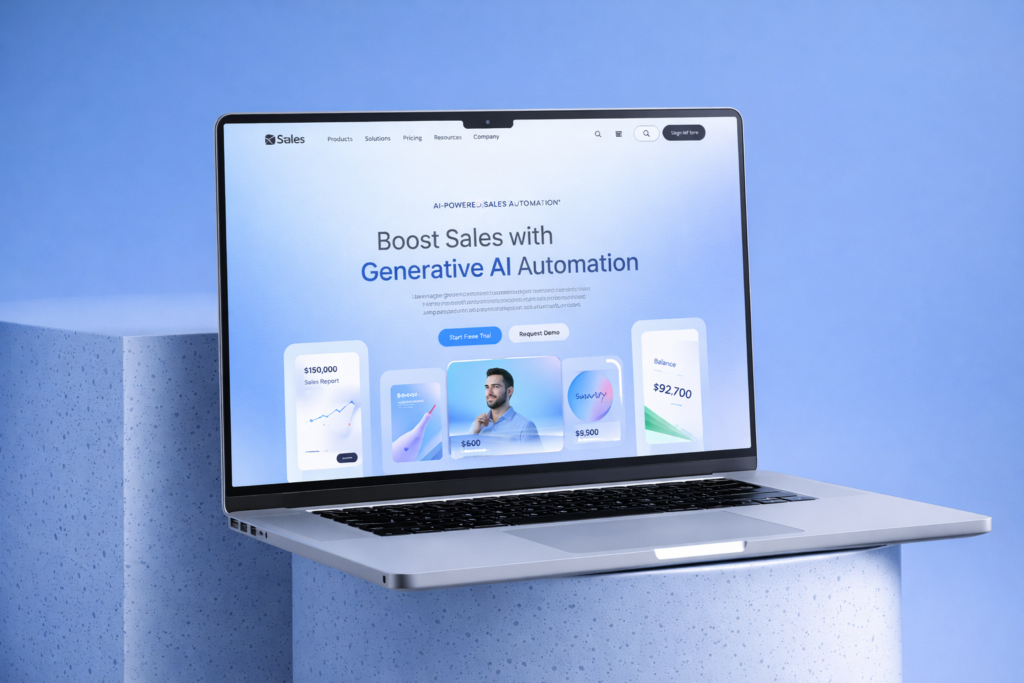
For many brands, web design projects stall due to slow feedback loops and inefficient workflows. Strong concepts can lose clarity through excessive revisions, delaying launches, and weakening the outcome.
To address this, NYC web design agencies are integrating generative AI into the early stages of the design process. AI-powered tools enable teams to rapidly explore layout concepts, visual systems, and UX structures using prompts informed by real user data. This approach reduces guesswork, shortens decision cycles, and keeps creative direction aligned from the start.
In this article, we explore how NYC web design agencies are reshaping digital experiences with generative AI, the key advantages it brings to modern design workflows, and how agencies can adopt AI responsibly while preserving creative and strategic integrity.
How NYC Web Design Agencies Are Redefining Digital Experiences with AI
Generative AI has become essential for agencies serving fast-moving industries such as food and beverage that demand differentiated digital experiences. Top web design firms in New York are adopting AI tools early and refining them internally before they become widely adopted. These tools are integrated into both strategy and execution, enabling faster iteration and more informed design decisions. Common applications include:
- Adaptive layout generation: Page structures automatically adjust based on content, screen size, and user behavior.
- AI-driven UX analytics: Design teams receive real-time insights into how users interact with interfaces, informing layout and navigation decisions.
- Dynamic content systems: Headlines, imagery, and interactive elements are generated and optimized based on audience intent and engagement patterns.
How Generative AI Is Elevating Creative Web Design
Design plays a decisive role in how users perceive a website. Studies show that 94% of first impressions are driven by visual and experiential elements, making thoughtful, high-impact design an important factor in whether users stay engaged or leave.
AI-powered tools support smarter layout generation, personalized user experiences, custom graphic creation, improved accessibility, and continuous real-time testing. Together, these capabilities enable web design that is not only visually compelling but also adaptive, data-informed, and aligned with how users actually interact with digital products.
AI-Powered Layout Generation for Faster Web Design
Generative AI has become a new standard in modern web design and development. Rather than starting from a blank canvas, designers now begin with structured prompts that accelerate creative direction and reduce early-stage friction.
AI-powered layout tools analyze brand guidelines, UX best practices, and content goals to recommend layout options that designers can quickly review and refine. This approach preserves creative control while significantly speeding up the decision-making process.
Generative AI also enables responsive design by default. Layouts automatically adapt to different devices, screen sizes, and usage contexts without manual rebuilding. When combined with advanced web design practices and AI tools that generate production-ready code, wireframing and front-end development timelines can be reduced from weeks to days, which allows agencies to move faster without compromising quality.
Machine Learning–Driven Personalization and UX Optimization
Machine learning delivers its greatest impact when websites adapt to real user behavior. Modern platforms analyze scroll depth, click paths, dwell time, and device context to dynamically adjust layouts, content blocks, and calls to action. This is where AI-driven UX optimization creates measurable value by identifying which hero sections convert, where navigation introduces friction, and which forms lead to drop-offs.
For enterprise clients, NYC web design agencies take this approach further. By integrating analytics platforms with AI-powered design systems, user data continuously informs design decisions from content hierarchy to in-page recommendations. Over time, these insights allow websites to evolve in response to user intent, creating digital experiences that feel responsive, intelligent, and purpose-built, precisely what generative AI in web design is meant to deliver.
Creative AI Tools Powering Visual Web Design
Today, NYC web design agencies use AI-powered image and video tools to create distinctive hero sections, icon systems, background textures, and product visuals while staying aligned with clearly defined brand guidelines.
Rather than relying on generic stock assets, designers use structured prompts to generate original, on-brand visuals or intelligently remix existing assets into new compositions. This approach expands creative exploration without sacrificing consistency.
Visual and creative AI tools are now central to creative web design with AI. They allow agencies to explore multiple art directions simultaneously and refine only the strongest concepts. For clients, this results in fresher, more distinctive aesthetics without inflated production costs.
AI-Driven Real-Time Testing and Continuous Optimization
AI has transformed how digital experiences are tested and refined. Instead of relying on occasional A/B tests, teams can now run continuous multivariate experiments that evaluate performance in real time and recommend the next best variations to test.
These AI-powered web design solutions assess elements such as button copy, hero imagery, pricing layouts, and content density to determine what performs best for specific audience segments. Leading agencies integrate this capability directly into their AI UI/UX innovation stack, making optimization a built-in part of daily operations rather than a standalone task.
Key Advantages of Generative AI for Creative Web Agencies

For creative web agencies, generative AI delivers clear, practical value across both strategy and execution. Below are the key advantages of generative AI for creative web agencies.
- Accelerated ideation and prototyping: Generative AI enables teams to produce multiple layouts, visual directions, and user flows within minutes. This rapid iteration shortens the path from concept to interactive prototype, making AI-powered web design solutions valuable for clients validating new products or campaigns before committing to full development.
- Broader creative exploration: By using generative AI in design, teams can test unconventional styles, motion concepts, and narrative approaches without incurring high production costs.
- Built-in responsive design: With generative design for responsive web pages, adaptability is addressed from the start. AI helps maintain hierarchy, clarity, and usability across devices, ensuring consistent experiences for brands serving global, mobile-first audiences.
- Data-informed design decisions: When AI-driven UI and UX innovation is paired with analytics, design choices are guided by real user behavior rather than assumptions. This evidence-based approach is a key reason industries such as finance, retail, and healthcare seek NYC digital transformation with AI partners over traditional agencies.
- Streamlined layout and code production: AI accelerates development by generating layout structures and foundational code. For agencies offering enterprise AI web design, this automation reduces delivery timelines and allows senior teams to focus on system architecture, security, and differentiated user experiences instead of repetitive build tasks.
Managing Generative AI in Creative Design: Challenges and Best Practices
Generative AI offers meaningful advantages in creative design, but realizing its value requires discipline. Below are the key challenges agencies face and the best practices that ensure AI enhances, rather than dilutes, creative outcomes.
- Balancing AI with human creativity: Experienced design teams use AI as a tool to explore variations and refine concepts, while designers maintain control over narrative, emotion, and brand nuance. Leading web design companies in NYC establish workflow guardrails to ensure AI-generated options are curated and contextualized by human judgment.
- Ethical and quality considerations: AI in design raises concerns about licensing, bias, and data usage, requiring careful platform selection and data training. Quality control is crucial, as human review ensures AI-generated designs meet UX, accessibility, and usability standards.
- Integrating AI into client workflows: For clients, AI can feel abstract or even intimidating. Agencies offering NYC AI design services prioritize transparency by clearly explaining what is automated, what remains human-led, and how data is handled. They review AI-generated options collaboratively, invite feedback, and present side-by-side performance insights to make value tangible.
Looking Ahead: The Future of Generative AI in NYC Creative Web Design
Generative AI is changing how modern websites are planned, built, and optimized. From layout structure to user experience and performance, AI-powered web design enables websites to adapt over time by learning from real user behavior to improve clarity, engagement, and results.
Top NYC web design agencies use generative AI to strengthen brand storytelling, deliver smarter personalization, and design interfaces that respond to user intent in real time. This creates digital experiences that feel intuitive, relevant, and purpose-driven without sacrificing visual quality.
Contact our team if you’re looking to build a website that evolves with your business.