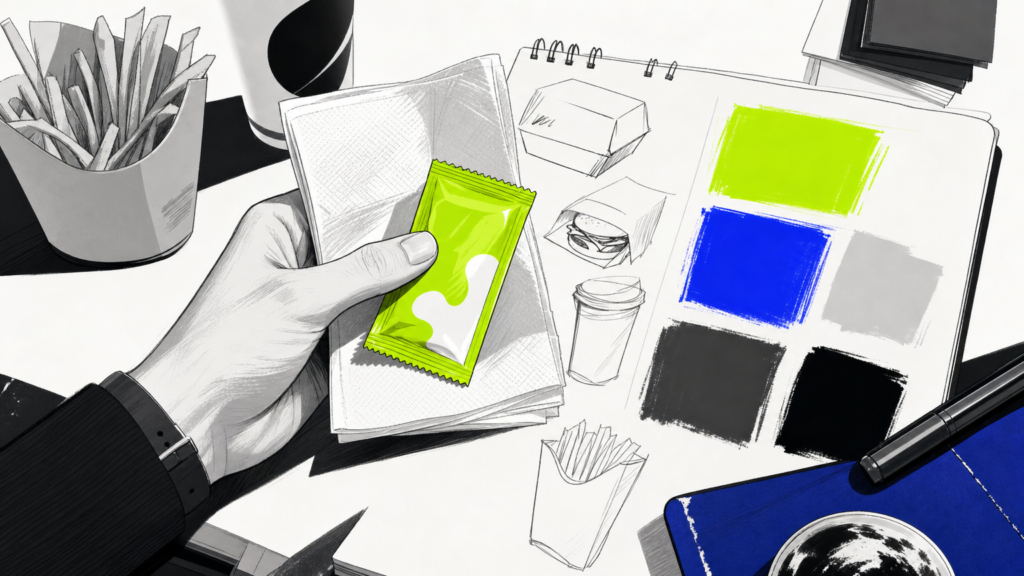


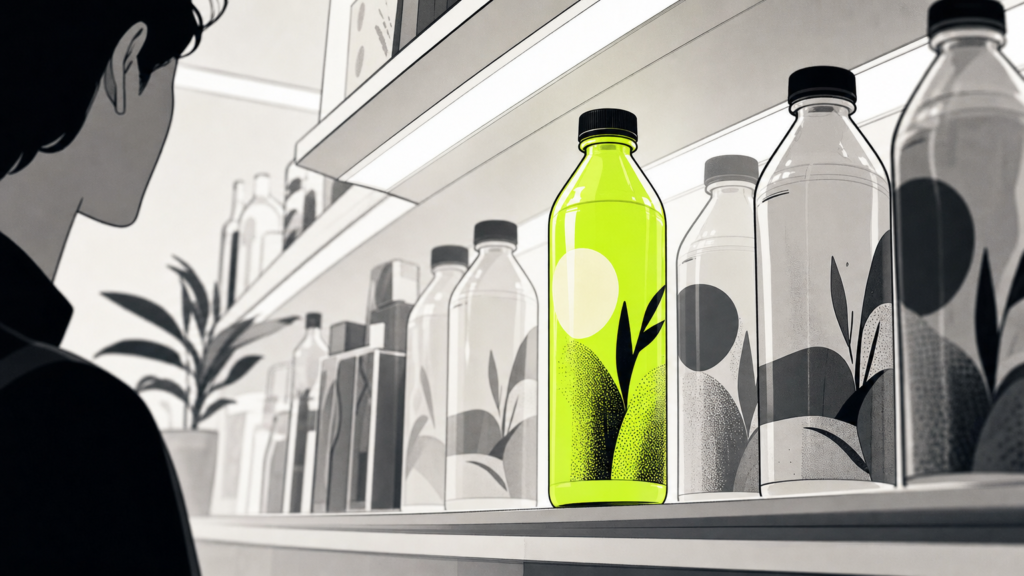
Beverage packaging design is one of the highest-stakes decisions a brand makes: the container on shelf has roughly two seconds to earn a purchase. MAVRK Studio helps beverage brands navigate that pressure with strategy-led creative that balances category codes, sustainability requirements, and retail compliance. This guide outlines the criteria you should use to evaluate any agency before you sign a contract, so the wrong groove does not get pressed into your first production run.
What to Look for in a Beverage Packaging Design Agency
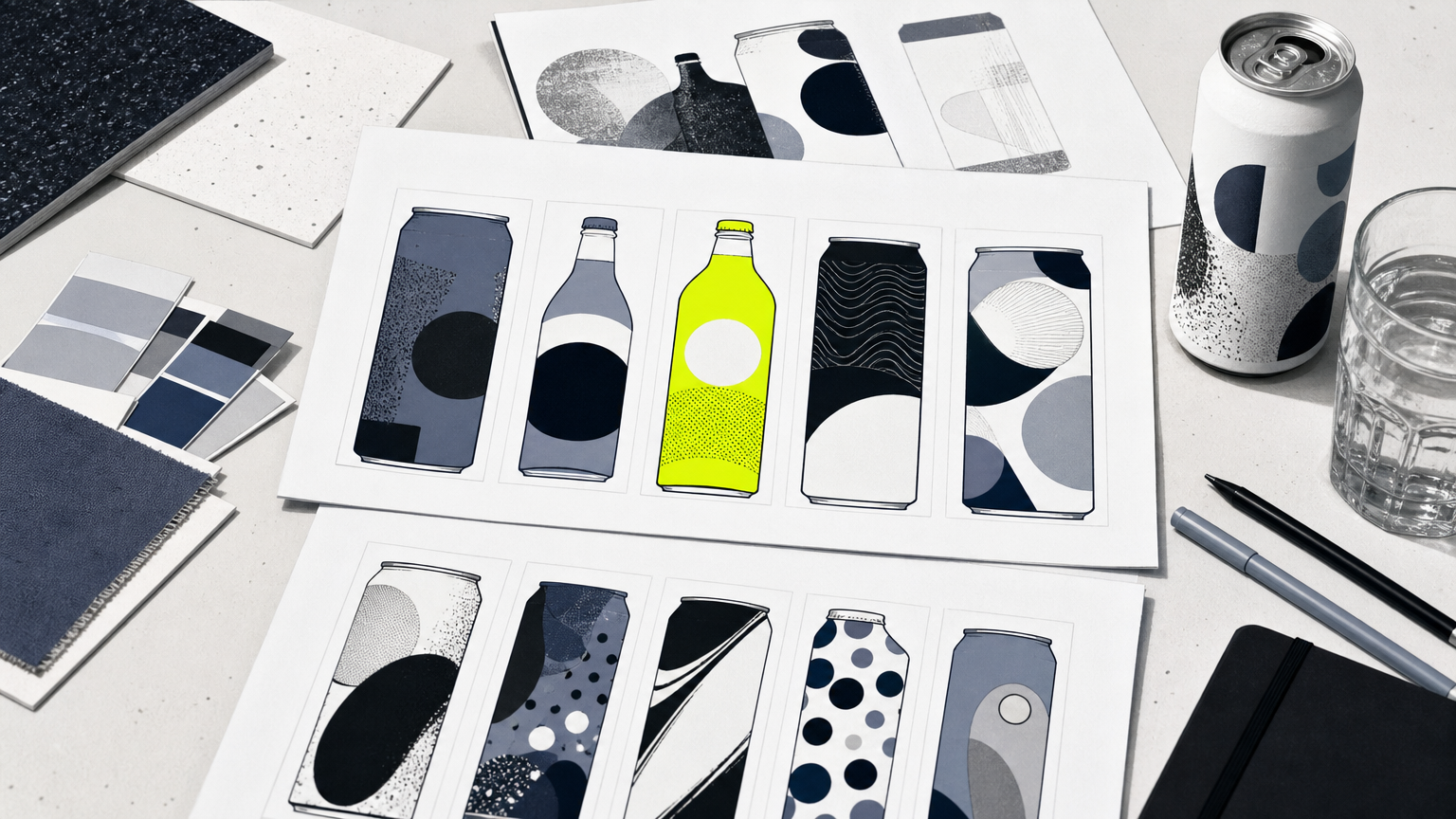
Before comparing quotes, decide what a qualified partner actually looks like. The agencies worth your time bring category fluency, a real process, and material knowledge that survives contact with a filling line. If any of those three legs are missing, the project wobbles. A useful reference point is our own packaging and brand identity primer, which lays out how these disciplines feed each other.
Category Experience and Portfolio Depth
Portfolios should span RTD, spirits, soft drinks, and functional beverages. Each sub-category has its own shelf logic, price ceiling, and consumer ritual. An agency that has only ever designed cold brew will not intuitively understand how a hard seltzer needs to read across a 40-foot cooler door. Ask to see creative packaging work across at least three formats, not one aesthetic repeated in different colorways.
Strategic Process vs. Execution-Only Services
Strategy-led shops run consumer research, competitive shelf audits, and positioning work before anyone opens Illustrator. Execution-only studios skip that and go straight to comps, which is faster and cheaper until launch day, when nothing on the bottle actually differentiates you. If you need a refresher on the difference, our CPG branding strategy guide walks through how positioning informs visual choices.
Sustainability and Material Expertise
Sustainable substrates are no longer a nice-to-have. The EU’s Packaging and Packaging Waste Regulation (PPWR) mandates minimum recycled content and standardized recyclability labeling across member states, and US retailers are following suit with their own supplier scorecards. An agency should be able to specify recyclable mono-materials, compostable label stocks, and lightweight glass without treating it as an afterthought, as we cover in the future of branding.
Takeaway: demand category range, a documented pre-design process, and fluency in eco-compliant substrates. Any one missing is a reason to keep looking.
Core Buying Criteria for Evaluating Agencies
Once you have a longlist, dig into how the agency actually ships work. This is where good portfolios die and good production partners are made. The criteria below separate a design vendor from a genuine creative agency partner for startups.
Print Production and Dieline Knowledge
A qualified agency supplies press-ready dielines, manages color profiles across offset, flexography, and digital printing, and talks directly to your contract manufacturer. If they hand you a PDF and vanish, you own every reprint that follows. Ask which printers they have worked with and how they handle Pantone-to-CMYK translation, an area covered in our post on common packaging design mistakes.
Regulatory and Labeling Compliance
Beverage labels in the US must meet FDA requirements for nutrition facts, ingredient declarations, and allergen statements. Spirits add a TTB approval loop that can extend timelines by four to twelve weeks. According to the TTB’s public labeling guidance, formula pre-approval is required for many alcohol categories before a label can even be submitted. An agency that has done this before saves you a cycle. Our brand transformation playbook touches on how compliance shapes creative decisions.
Brand Identity Integration
Packaging is one expression of a brand system, not the whole thing. Agencies with in-house identity capabilities keep typography, palette, and iconography aligned with existing guidelines rather than inventing visual drift on the label. If your identity is still forming, review the art of designing a brand logo before commissioning packaging.
Also worth confirming: does the agency handle structural design (bottle, can, closure) or graphics only? Structural work requires collaboration with a manufacturer’s engineering team. A full rebrand with structural changes typically runs 16 to 24 weeks; a graphic-only label refresh runs 6 to 10. Brand identity’s role in hospitality and consumer categories is a good frame for how deep the work should go.
Takeaway: print-ready, compliance-fluent, identity-integrated. Anything less costs you in rework.
Red Flags to Avoid When Hiring a Packaging Agency
Some warning signs show up in the pitch deck. Others only surface at press check. Both matter. This is the section where our creative agency selection guide earns its keep for founders new to the process.
Spec Work and Template-Based Deliverables
If an agency opens with a gallery of generic beverage templates dressed up in your colors, expect generic shelf presence. Bespoke concepts start from your positioning, not from a stock layout. The archives at The Dieline’s beverage packaging category are a useful benchmark for what genuinely differentiated work looks like across the category.
No Pre-Press or Print Liaison Services
An agency that cannot produce print-ready files or facilitate pre-press proofing is handing you the riskiest part of the job. Colors shift, dimensions drift, and unlabeled bleeds become expensive at 50,000 units. A partner that skips press checks may deliver visually appealing concepts that are technically unprintable at scale, a pattern flagged in our brand vs marketing strategy breakdown.
Unclear Intellectual Property Ownership
Contracts should transfer full IP ownership of final files to the client upon payment. Some studios retain licensing rights that restrict future modification or use in adjacent SKUs, which becomes a problem the moment you extend the line. Read the assignment clause carefully, and if flat fees look unusually low, assume critical deliverables (extra sizes, colorway variants, e-commerce exports) are excluded. Our e-commerce essentials guide explains why digital asset exports are not optional anymore.
Takeaway: templates, no pre-press, and murky IP are three exits from the same building. Walk out of any of them.
Top Picks: Agencies Evaluated Against These Criteria
Rather than rank agencies by revenue, judge each against the criteria above: category range, process depth, print capability, compliance fluency, and IP clarity.
MAVRK Studio: Best for Strategy-Led Beverage Brands
MAVRK combines brand strategy, structural thinking, and print-production management in one engagement. That works especially well for emerging and mid-market beverage brands that need end-to-end support without stitching three vendors together. Founders can review adjacent work on social media for food and beverage brands to see how packaging feeds the wider brand system.
Full-Service Global Agencies
Shops like Pearlfisher and Turner Duckworth carry deep FMCG credentials and strong retail analytics muscle. They also carry minimum project budgets that price out early-stage brands. If your Series A is closed and your distribution deal is signed, they belong on the shortlist. If not, the ROI is hard to defend, as our cost-effective marketing strategies piece argues in a related context.
Boutique Specialists and Freelance Networks
Freelance platforms like 99designs and Dribbble surface talented individuals at low cost, but you lose project management, regulatory knowledge, and manufacturer liaison. Boutique regional studios sit in between: faster communication, more founder access, tighter scopes. If you are launching a first SKU, our pitch deck guide for consumer brands covers how to brief a smaller partner effectively.
Takeaway: the right choice is the one whose scope, budget floor, and category experience match your launch stage. Ask for a written scope of work that itemizes every deliverable, revision round, file format, and native-file ownership.
How to Structure Your Agency Search and Selection Process
A good process shortens the timeline and filters for real fit. A bad one produces a folder of unsigned proposals and a delayed launch. Use the sequence below, and cross-reference our brand builder vs product pusher framing when writing the brief.
Building a Shortlist and Running a Brief
A structured creative brief should include your target retail channel, primary consumer demographic, competitive set on shelf, brand personality attributes, and hard constraints such as material type or label format. Send the same brief to three to five agencies. Consistency in the input makes proposals actually comparable, a point echoed in our CPG advertising strategies post.
Evaluating Proposals and Pricing Models
Fixed project fees give budget certainty but often cap revisions. Retainer models suit brands with ongoing SKU expansion. Hybrid models (fixed for the initial design, retainer for extensions) are increasingly common. Weigh pricing against scope, not headline number, and remember that brand identity investment compounds across every future SKU.
Questions to Ask in the Discovery Call
Ask about experience with your specific beverage sub-category, their pre-press workflow, and whether they have worked with your target manufacturer or retailer. Request two or three case studies from directly comparable categories, and take at least two client references. Reference checks on timeline adherence and post-delivery support are consistently cited as the most predictive signal, more so than portfolio browsing. For sanity checks, our food and beverage social guide shows how packaging decisions ripple into launch marketing.
Takeaway: same brief to every agency, references over reels, scope over sticker price.
Frequently Asked Questions
How much does beverage packaging design cost?
Ranges are wide. Freelance label refreshes start around $2,500. Boutique agency projects run $15,000 to $60,000. Full rebrands with structural work at established shops start near $75,000 and reach into the mid six figures depending on scope and SKU count.
How long does a beverage packaging design project take?
A graphic-only label refresh typically takes 6 to 10 weeks. A full rebrand with structural changes runs 16 to 24 weeks. Add 4 to 12 weeks for TTB approval on alcoholic beverages and 2 to 4 weeks for press proofing.
What files should a packaging design agency deliver at the end of a project?
Expect editable native files (Illustrator, InDesign), press-ready PDFs with bleeds and crop marks, dielines, Pantone and CMYK color specifications, alternate label sizes, digital assets for e-commerce, and a written brand guideline addendum covering packaging-specific applications.
Do I need a separate agency for structural packaging design and graphic design?
Not necessarily. Some agencies handle both in-house, which keeps bottle shape, closure, and label graphics coherent. If your agency only does graphics, they should still liaise with your manufacturer’s structural engineering team to prevent misalignment at production.
What is a dieline and why does it matter for beverage packaging?
A dieline is the flat, cut, and fold template a printer uses to produce a label or carton. It defines exact dimensions, bleeds, and safe zones. Without an accurate dieline, artwork prints off-register, crops incorrectly, or fails at application.
How do I ensure my beverage label meets FDA or TTB compliance requirements?
Confirm your agency has produced compliant labels in your category before. Non-alcoholic beverages follow FDA rules for nutrition, ingredients, and allergens. Alcohol requires TTB formula and label pre-approval. Third-party compliance reviewers can audit final files before submission.
What is the difference between primary and secondary beverage packaging?
Primary packaging is the container the consumer holds: bottle, can, pouch. Secondary packaging is the shipping carton, multipack sleeve, or display tray. Misalignment between the two undermines shelf coherence, especially in club and mass retail channels.
Can I use a freelancer instead of a packaging design agency for my beverage brand?
Yes for simple label refreshes with a clear brief. No for launches requiring strategy, regulatory work, structural design, or manufacturer coordination. Freelancers rarely carry the project management or pre-press capability an agency provides across a multi-SKU rollout.
Choosing the Right Partner
The right beverage packaging design agency is the one whose process, category depth, and production capability match your launch stage, not the one with the loudest portfolio. Use the criteria in this guide to filter, and use references to confirm. If you want a partner that handles strategy, structural thinking, and print production under one roof, MAVRK Studio’s beverage practice is built for exactly that shape of brief.