



What Is Brand Development?
Brand development is the ongoing work of shaping how a brand is perceived through its positioning, messaging, and behavior in the market. It defines what a brand stands for and ensures that perception is built deliberately.
It connects what a brand says to what it does, creating consistency across every touchpoint, from marketing and sales to product and customer experience. That consistency builds trust, strengthens recognition, and supports long-term growth.
It is a strategic discipline that provides the structure needed to make confident decisions, maintain focus, and build durable relationships with customers in a competitive landscape.
Process of Brand Development
Brand development is a structured, long-term discipline and not a one-time initiative. From early definition to sustained maturity, each stage is designed to ensure the brand remains relevant, credible, and aligned with the audience it serves. When executed well, this process creates the conditions for trust, loyalty, and durable growth.
- Establishing Brand Identity: A well-defined brand identity and positioning provide the framework for all future decisions. They shape how the brand communicates and operates, keeping messaging clear, consistent, and grounded in strategy.
- Integrating Customer Feedback: Customer insights like reviews help validate assumptions, surface gaps, and refine how the brand shows up across touchpoints. This stage ensures the brand evolves in response to real behavior, not internal preference.
- Developing a Content Marketing Strategy: With a clear identity in place, content becomes the vehicle for consistent communication. A focused content strategy translates brand principles into clear, repeatable narratives across the channels that matter most, reinforcing recognition and trust over time.
- Managing the Brand: Brand management ensures the brand remains aligned as the company scales, teams expand, and markets shift. This includes maintaining standards, auditing execution, and adjusting strategy without compromising the core identity.
- Fostering Customer Loyalty: Loyalty is built through reliable experiences, thoughtful engagement, and decisions that consistently reflect the brand’s values. When customers know what to expect and trust the brand to deliver, long-term relationships follow.
Brand Development Strategies and Types
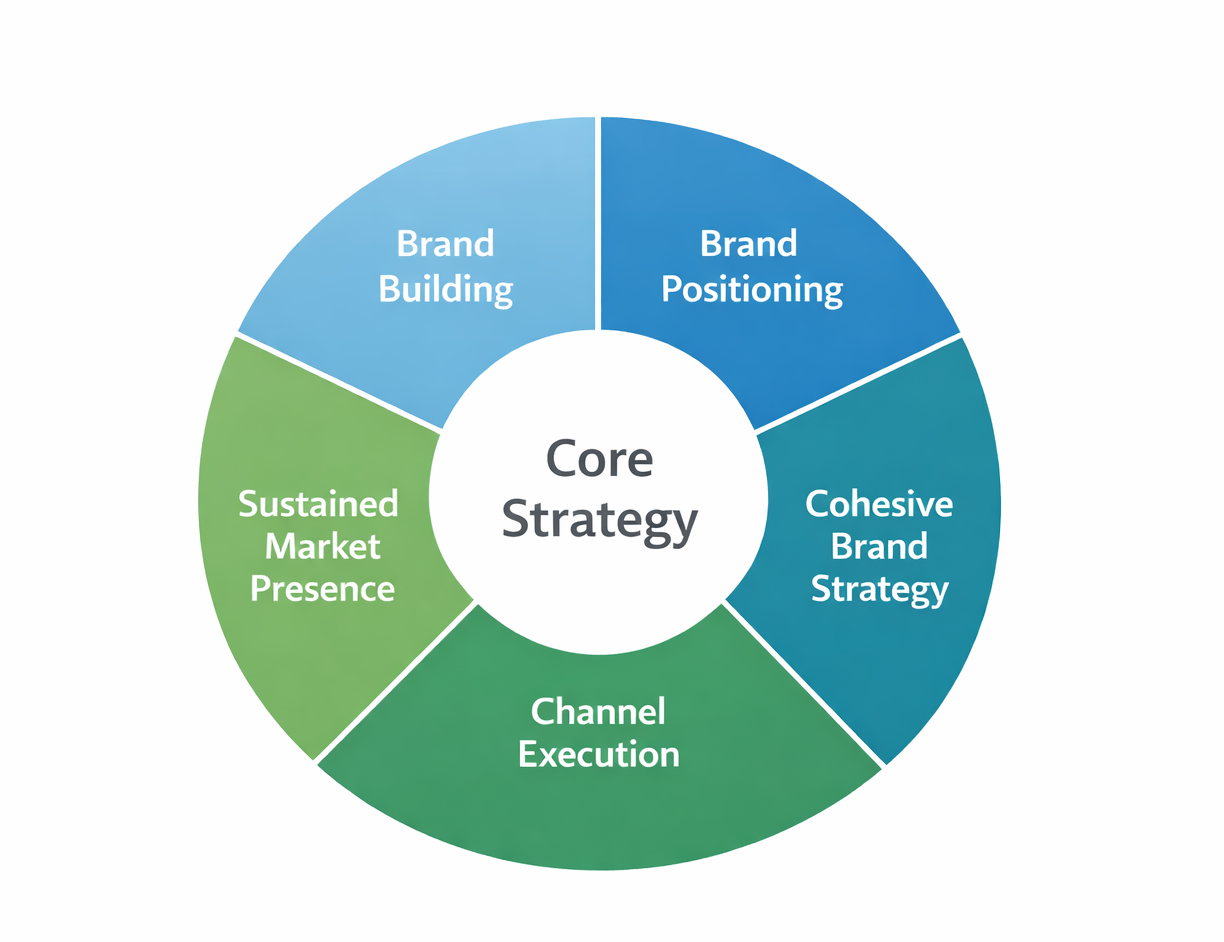
- Brand Building: Brand building focuses on creating a cohesive visual and verbal system that reflects the brand’s values and point of view. Consistent execution across all touchpoints strengthens recognition and builds credibility over time.
- Brand Positioning: Positioning defines where the brand sits in the market and why it matters. It clarifies who the brand serves, the problem it solves, and how it differs from competitors. Strong positioning ensures relevance to new audiences while reinforcing what makes the brand distinct.
- Cohesive Brand Strategy: A cohesive brand strategy aligns identity, messaging, and execution with long-term business goals. Rather than relying on isolated tactics, it provides a clear framework for decision-making and adapts to market and customer shifts without compromising the brand’s core.
- Channel Execution: Effective brand development depends on intentional use of marketing channels. Each channel serves a specific role and should reinforce the broader brand system. The focus is on clarity and consistency, ensuring the brand shows up where it matters most.
- Sustained Market Presence: When these strategies work together, the result is a brand that is differentiated, credible, and resilient. This approach supports audience growth, strengthens long-term relationships, and enables sustained performance in competitive markets.
Strategic Importance of Brand Development
Strategic brand development plays a role in how a brand competes, grows, and sustains relevance in its niche market. It focuses on a clearly defined core identity, which serves as the foundation for all external communication and brand-led decisions. This identity reflects the company’s values and sets expectations for how it engages with customers.
A strong, well-managed brand identity also contributes directly to brand value. Customers are more likely to engage with and remain loyal to brands they recognize and trust. By maintaining clarity, consistency, and strategic intent, brands can strengthen their market position and support long-term, sustainable growth.
Factors Influencing Rebranding Decisions For Established Companies
Brand redevelopment is typically prompted by clear market signals that indicate misalignment between how a brand operates, how it’s perceived, and where the business is headed. Common triggers for redevelopment include:
- Shifts in the target audience: Changes in customer preferences, behaviors, or demographics can affect relevance if the brand no longer reflects who it serves.
- Increased competitive pressure: New or repositioned competitors may expose weaknesses in differentiation or challenge the brand’s current market position.
- Market or regulatory change: Evolving technologies, regulations, or industry dynamics can render existing brand strategies outdated or ineffective.
- Misalignment between promise and experience: Customer feedback that highlights a gap between what the brand claims and what customers experience is a strong signal for reassessment.
- Declining loyalty or engagement: Drops in retention, repeat usage, or engagement often point to deeper brand or positioning issues.
- Outdated brand execution: Visual identity, messaging, or marketing systems that no longer reflect current standards or expectations can undermine credibility.
Brand redevelopment is not about starting over, but it’s about recalibrating. The goal is to refine the existing identity so it can better support current realities and future direction. When approached strategically, redevelopment realigns the brand with its core values, clarifies its role in the market, and restores coherence across every touchpoint.
Why Brand Strategy Requires an External Strategic Partner
A branding agency provides the dedicated services required to align brand direction with business objectives and ensure the brand supports growth and not just visibility.
An agency brings structure to the process, treating brand development as a business system rather than a creative exercise. It connects positioning, messaging, and execution, ensuring consistency across teams, channels, and touchpoints.
A branding agency like MAVRK Studio translates strategy into action, maintaining clarity and coherence as the brand scales. By working across functions, it embeds the brand’s values and standards into daily operations, keeping the brand accountable and on course.
Questions for Effective Brand Development
Asking the right questions early ensures the brand remains aligned with business priorities, audience expectations, and long-term growth. These questions help clarify direction, surface gaps, and keep brand decisions grounded in strategy rather than assumptions.
- How does our brand identity support our business values?
A brand should reflect how the business operates, not just how it presents itself. Regularly reviewing the brand’s identity helps ensure values, positioning, and behavior remain aligned and credible.
- What drives recognition and recall in our market?
A clear brand system across digital and physical channels reinforces messaging, strengthens visibility, and improves long-term recall.
- How do we stay relevant as the market evolves?
Ongoing assessment of performance, audience behavior, and market shifts allows the brand to evolve without losing its core.
- How do we grow without weakening loyalty?
Expansion should not come at the expense of existing customers. Effective brands balance acquisition with retention by tailoring engagement while maintaining a consistent brand experience.
- How is the brand reinforced across the organization?
Branding is not limited to marketing. When brand principles are embedded into product, service, and internal decision-making, the brand becomes a consistent and trusted system.
Building a Brand That Holds Up Over Time
Brand development is not a one-time effort, but it’s a system that supports long-term growth. It starts with a clearly defined core identity and carries through every decision, message, and market interaction. When managed with intent, it creates alignment, focus, and consistency across the business.
If your brand needs sharper positioning, stronger consistency, or clearer direction, working with MAVRK Studio can help bring focus to the system and execution behind it.